Key Takeaways
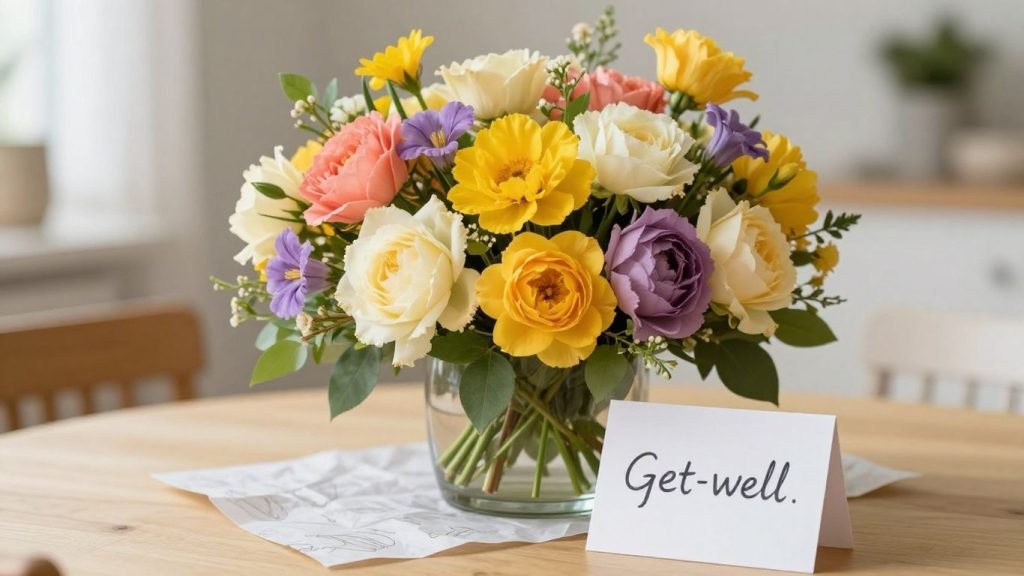
A considerate get-well gift takes the recipient’s health, surroundings, personality, and timing into account.
- Check hospital or facility rules before ordering flowers.
- Choose cheerful blooms that suit the recipient’s taste and space.
- Consider low-maintenance arrangements for someone with limited energy.
- Confirm the delivery address, contact details, and preferred date.
- Add a personal message that offers warmth without pressure.
Understand the recipient’s recovery needs
The best get-well gesture begins with the person, not the product page. Their recovery setting, energy level, preferences, and practical needs should all influence the choice. When sending get well soon flowers Altona recipients will appreciate, a little thought beforehand can make the gift feel genuinely personal rather than automatic.
Consider their relationship and personality
A bouquet for a close family member can be bright and playful, while flowers for a colleague or neighbour may feel better in a modest, polished style. Think about colors they usually wear, flowers they have enjoyed before, and whether their home has a simple or more decorative character. A small arrangement chosen with care may mean more than an oversized display that does not suit them.
If you are unsure what they like, this guide to choosing get well soon flowers in Altona offers a useful starting point for balancing personal taste with practical considerations. The central question is simple: what would make this person feel remembered?
Check whether flowers are allowed
Hospitals, clinics, rehabilitation centres, and aged-care facilities can have different rules. Some limit flowers in shared rooms, intensive-care areas, or wards where hygiene and allergy concerns are especially significant. Call the reception desk or the recipient’s care team before placing an order, particularly if you do not know the facility well.
If flowers are not permitted, a card, a small non-floral gift, or something for the recipient’s eventual return home can still carry the same thoughtful intention. Avoid assuming that a delivery service’s ability to accept an order means the facility will allow it at the bedside.
Account for allergies and sensitivities
Strong fragrance can be uncomfortable for someone recovering from illness, taking medication, or sharing a room with others. If you know the recipient has allergies or asthma, ask the florist about a lower-scent arrangement and mention the concern clearly in the order notes. It is also wise to avoid loose extras such as heavily scented products unless the recipient has specifically said they would enjoy them.
A florist may need to substitute flowers based on availability, so explain the sensitivity rather than naming only one preferred bloom. That gives the arranger a better chance of preparing something attractive and suitable.
Choose practical gifts for hospital or home recovery
Consider how the flowers will be received and cared for. A vase-ready bouquet can be helpful at home, while a compact arrangement may be easier in a hospital room with limited table space. If the recipient is tired, recovering alone, or unable to change water regularly, select something that does not demand much attention.
A few practical checks can guide the decision:
- Is there a stable surface for the arrangement?
- Will someone be available to trim stems and change water?
- Is the recipient likely to return home soon?
- Would a card or small snack be more useful than a larger bouquet?
These details do not make the gesture less romantic or cheerful. They show that the gift has been chosen for the recipient’s actual circumstances.
Choose flowers that communicate encouragement
Color and form can change the feeling of a room, especially when someone is spending long hours resting there. Cheerful flowers can bring energy, while softer shades may create a calmer atmosphere. The most successful choice usually balances encouragement with the recipient’s comfort rather than trying to make the arrangement as dramatic as possible.
Select uplifting colors and blooms
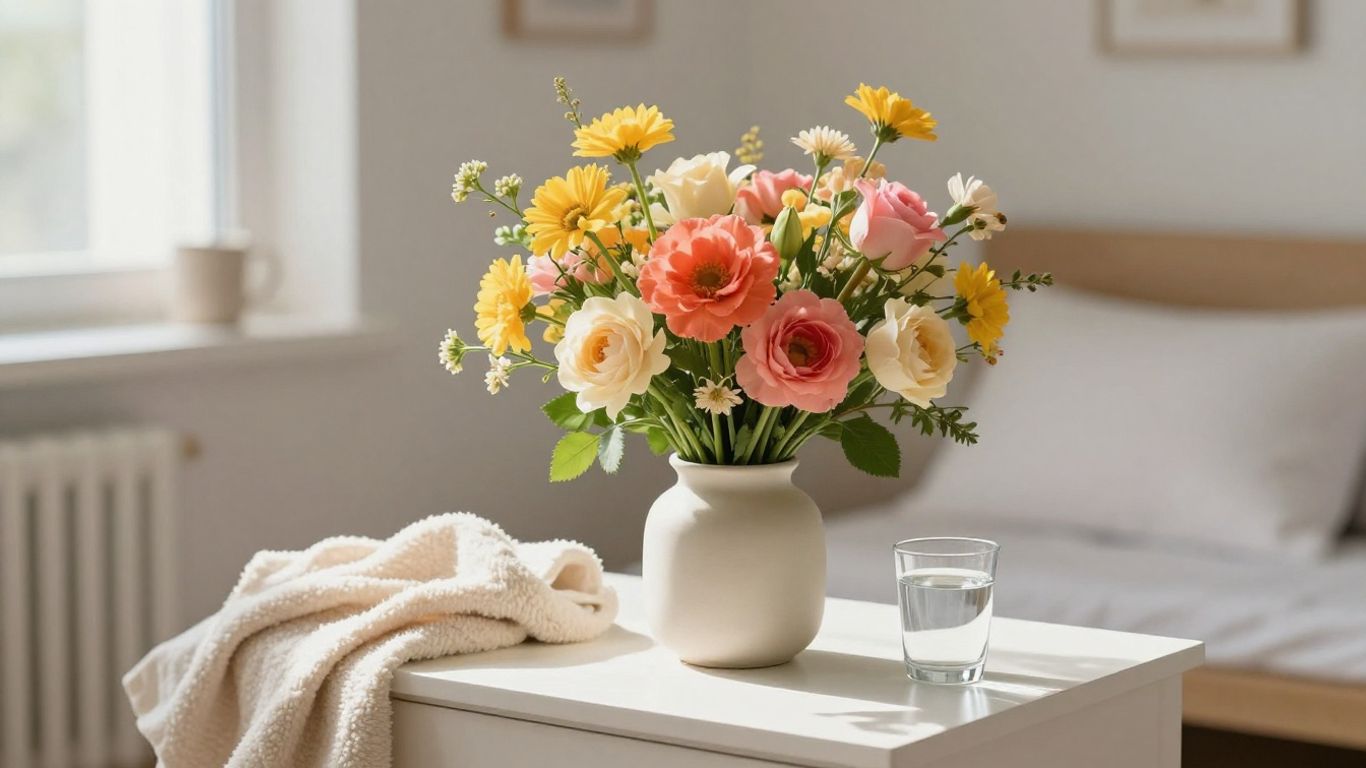
Yellow, coral, orange, and bright pink can create a lively impression, while lavender, cream, pale blue, and soft white may feel quieter. Sunflowers, roses, gerberas, lilies, and mixed seasonal blooms are all possibilities, but the recipient’s taste should lead the decision. If fragrance is a concern, ask for suitable alternatives before confirming the order.
A mixed bouquet often works well when you know only a little about someone’s preferences. Choose one or two lively colors, then let softer supporting blooms keep the arrangement from feeling too loud. A personal color choice can make even a simple bouquet feel much more intentional.
Compare low-maintenance and long-lasting flowers
Recovery can leave people with little patience for complicated care, so choose an arrangement that can be enjoyed without much work. Ask whether the bouquet arrives arranged in water, whether care instructions are included, and how often the water should be changed. A compact design may also stay fresher in a warmer room than a crowded, oversized arrangement.
For a home delivery, include straightforward care guidance with the flowers. For a hospital delivery, prioritize convenience: a stable container, manageable size, and minimal need for tools are often more valuable than an elaborate design.
Avoid arrangements that may feel too formal
Some formal arrangements are beautiful but can seem distant when the purpose is to offer comfort. Tall, highly structured designs may also be awkward beside a hospital bed or on a small bedside table. Unless the recipient enjoys traditional arrangements, choose an open, friendly style with natural movement and accessible colors.
The message matters too. “Thinking of you” or “Wishing you easier days ahead” usually feels warmer than language that sounds ceremonial. Keep the flowers and the note aligned with the relationship.
Match the bouquet to the occasion and relationship
A first-day hospital visit may call for a small, cheerful gesture, while a longer recovery at home could suit a fuller arrangement with a vase or basket. For a colleague, a group card and modest bouquet may be appropriate. For a partner or close relative, favorite flowers, familiar colors, or a private joke can make the gift more intimate.
The aim is not to follow a rigid flower code. It is to send something that feels like it came from you and fits the stage of recovery.
Pick the right arrangement style
The arrangement’s format affects presentation, care, and how easily it fits into the recipient’s space. Bouquets are often lively and personal, while boxed flowers and baskets can be easier to place or maintain. Consider the recipient’s setting before deciding which style looks best online.
Bouquets for a personal and cheerful gesture
A hand-tied bouquet has a relaxed, welcoming quality and can feel especially personal when it includes the recipient’s favorite colors. It works well for a home visit or delivery where someone can place the stems in a suitable vase. Ask whether a vase is included if you are unsure, since the recipient may not have one available.
Bouquets are also easy to tailor. You can request a smaller size for a bedside table or a softer palette for someone who prefers understated decoration.
Boxed flowers for convenient presentation
Boxed arrangements arrive in a container designed for the flowers, which can make them convenient for a hospital room, reception desk, or temporary accommodation. They may not require the recipient to find a vase immediately, and their shape can be easier to position on a limited surface.
Check the care instructions before ordering. Even a convenient box may need water or occasional attention, and the recipient should know what to do without having to work it out while resting.
Flower baskets for longer-lasting variety
Baskets can provide a broad mix of colors and textures in a stable presentation. They may suit a home recovery where the arrangement can sit on a coffee table or kitchen counter, particularly when the recipient enjoys a fuller display. Their size should still match the available space and the amount of care someone can realistically provide.
Ask about the basket’s contents and watering requirements. A varied arrangement is only a good choice if it remains manageable after delivery.
Add-on gifts that complement the arrangement
A small card is usually the most useful addition because it explains the feeling behind the flowers. Depending on the recipient and any dietary restrictions, you might also consider tea, a puzzle book, a magazine, or another quiet activity. Gifts for patients at Altona Community Health Centre may include items such as books, magazines, games, or gourmet baskets, but facility rules and the recipient’s health should guide the final choice.
Avoid adding extras simply to make the order look larger. One suitable item is more considerate than several things the recipient cannot use.
Plan delivery in Altona
Good delivery planning protects the thoughtful nature of the gesture. A beautiful arrangement can become stressful if it arrives after discharge, goes to the wrong entrance, or cannot be accepted by the facility. Confirm the practical details before you begin comparing designs.
Choose a convenient delivery date
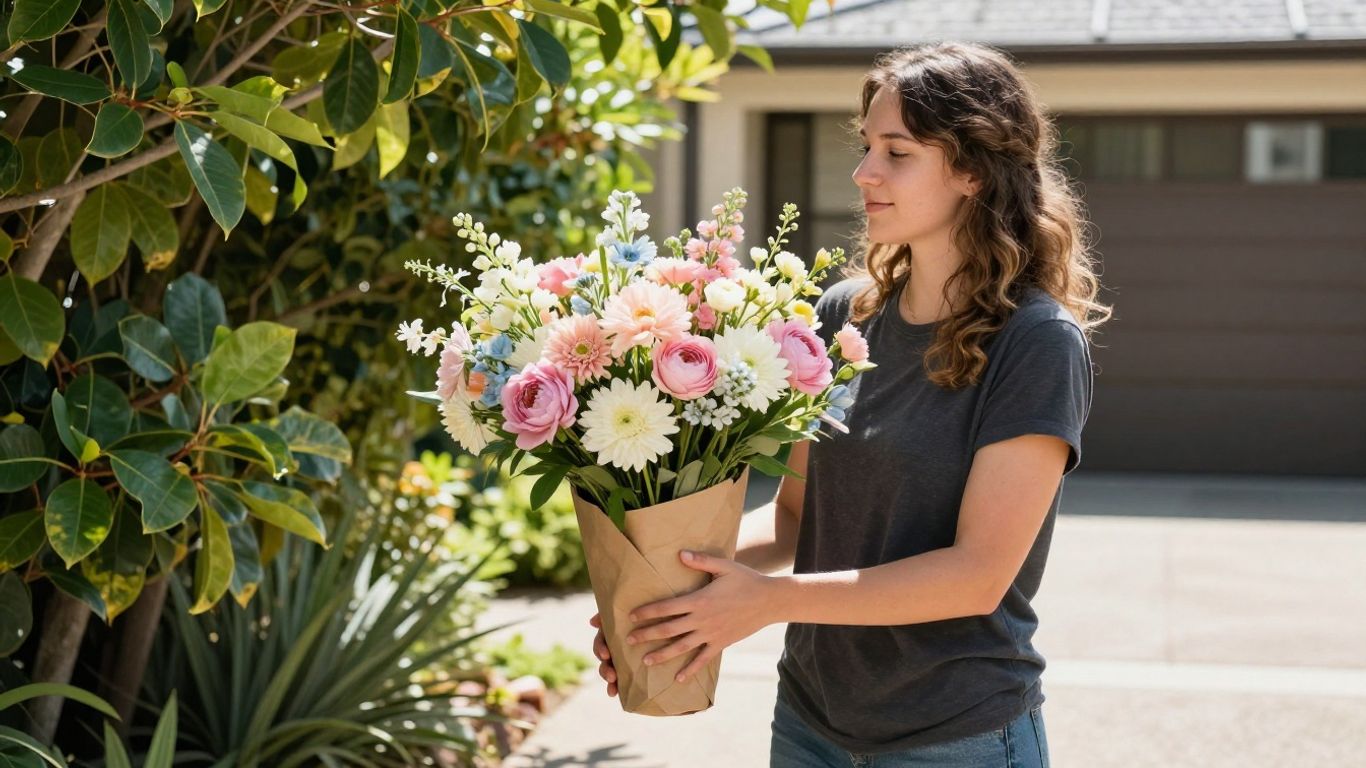
Ask the recipient, a relative, or a care contact when delivery is most likely to be useful. A bouquet sent on the day of a procedure may be welcome, but a later delivery can be better if the recipient will be resting or moving between facilities. For home recovery, avoid a date when nobody can bring the flowers inside.
If the timing is uncertain, ask the florist whether the order can be redirected or rescheduled. Do not promise a specific arrival time unless the delivery service explicitly offers one.
Confirm the recipient’s address and contact details
Use the full address, building or ward information, unit number, and a phone number the driver can reach. For hospitals and clinics, include the recipient’s full name and any patient or department details the facility requires. Double-check spelling before paying, since small errors can cause delays.
Keep the delivery note concise but useful. Mention reception instructions, access codes, preferred drop-off points, and whether the driver should call on arrival.
Arrange delivery to a hospital, clinic, or private home
A private home is generally straightforward, but a hospital or clinic may have separate receiving procedures. Confirm whether deliveries go to a main desk, gift shop, ward, or external entrance. If the recipient may be transferred or discharged, ask what the florist’s policy is before ordering.
Wildberry Flowers offers fresh flower delivery in Altona and states that same-day delivery is available for orders placed before 12 pm. Treat that cutoff as a planning detail rather than a guarantee for every arrangement or address, and verify availability during checkout.
Consider same-day delivery cutoffs and availability
Same-day service can be helpful for a last-minute gesture, but cutoffs, stock, traffic, and delivery zones may affect what is possible. Order earlier when the recipient is in a facility, needs a particular flower, or has strict delivery instructions. If a substitution is necessary, decide in advance whether similar colors and value are acceptable.
A local delivery guide can also help you think through timing, address accuracy, and care instructions before placing the order. The more complete the information, the less likely the recipient or their family will need to solve delivery problems.
Order get well soon flowers online
Online ordering is convenient, but a polished product image does not answer every practical question. Read the arrangement details, delivery terms, and substitution policy before adding flowers to the cart. A few minutes of comparison can prevent disappointment and help you choose something appropriate for the recipient’s recovery space.
Compare local florists and arrangement options
Start with florists that clearly show their delivery area, arrangement sizes, and available formats. Compare the overall shape, color palette, container, and likely care needs rather than focusing only on the price. If you are sending get well soon flowers Altona residents will receive locally, check that the florist actually delivers to the relevant suburb and facility.
Wildberry Flowers is one local option with online ordering and Altona delivery information. Its published service description focuses on fresh flowers and same-day delivery before 12 pm, so those are the capabilities to consider when they match your timing needs.
Review freshness, substitutions, and delivery policies
Look for clear information about seasonal availability and what happens if a particular flower is unavailable. A good substitution policy should preserve the arrangement’s general style, color balance, and value. Read whether the florist contacts you first or makes an equivalent choice automatically.
Also check how the flowers are packaged, whether a message is included, and what happens if nobody answers the door. These details matter more than a perfect photograph when the arrangement is being sent to someone who is unwell.
Set a suitable budget before ordering
A modest arrangement can still be meaningful, so set a budget based on your relationship and circumstances rather than feeling obliged to choose the largest option. Remember to include delivery fees, a vase or container, and any add-ons in the total. If several people are contributing, agree on the budget and message before ordering.
Price should be weighed alongside size, freshness, presentation, and delivery reliability. A smaller bouquet that arrives on time and suits the recipient is usually a better gift than a larger one with unclear arrangements.
Use secure checkout and provide clear instructions
Use the florist’s own checkout, review the final order summary, and make sure the recipient’s details are correct. Write delivery instructions in plain language, then include a short note about allergies, fragrance, or facility rules if relevant. Save the confirmation so you can refer to the order number if anything changes.
After ordering, keep an eye on email or phone updates. If the recipient’s condition or location changes, contact the florist promptly rather than waiting until the planned delivery window.
Write a thoughtful message with the flowers
Flowers create the visual gesture, but the card often becomes the part the recipient keeps. A good note should sound like you, acknowledge the difficult moment, and leave room for the person to recover at their own pace. It does not need to be long or unusually clever.
Keep the message warm and positive
Use natural language that offers care without pretending the recovery is easy. “Thinking of you and hoping today feels a little lighter” is gentle and sincere. Avoid forcing cheerfulness or promising that everything will be fine when the recipient may be dealing with uncertainty.
A few genuine words are better than a generic paragraph copied from a card. Mention that you are thinking of them, wish them comfort, and let the flowers carry some of the visual warmth.
Personalize the note with shared memories
A small shared memory can make the message feel unmistakably yours. You might refer to a favorite walk, a running joke, a meal you plan to share, or the recipient’s usual resilience. Keep the memory pleasant and easy to receive; the note should comfort rather than demand a response.
For example, you could write, “I’m looking forward to our next coffee and hearing your latest stories. Rest as much as you can—I’m thinking of you.” That is personal without becoming overly sentimental.
Offer practical support without creating pressure
If you want to help, make the offer specific and easy to decline. “I can drop off dinner on Thursday” is clearer than “Let me know if you need anything,” while “No need to reply” removes pressure from someone with limited energy. Only offer what you can reliably do.
The note should not make the recipient feel responsible for reassuring you. Keep the focus on their comfort and make any practical offer secondary to the good wishes.
Adapt the wording for different stages of recovery
Early recovery may call for a brief message that respects fatigue and uncertainty. During a longer period at home, you can be more conversational and mention future plans without setting a deadline. For someone returning to work or normal routines, recognize the progress while accepting that recovery may still be gradual.
A simple closing such as “One day at a time” or “Wishing you steady healing” can suit many situations. Match the tone to your relationship, then reread the note as if you were tired and receiving it.
Conclusion
Choosing get well soon flowers in Altona is less about finding the grandest arrangement than making a considerate decision. Check the recipient’s setting and sensitivities, choose a style they can enjoy, confirm delivery details, and add a message that sounds like you. When those details work together, even a modest bouquet can become a reassuring reminder that someone is thinking of them.
Frequently Asked Questions
What flowers are best for someone recovering from illness?
Choose flowers that suit the recipient’s preferences, available space, and ability to care for them. Cheerful colors and lower-maintenance arrangements are often practical, but fragrance and facility rules should come first.
Can I send flowers to a hospital in Altona?
Possibly, but each hospital or clinic may have its own delivery and flower policies. Confirm the rules with the facility, then provide the recipient’s full name, ward or department details, and a contact number.
Are strongly scented flowers suitable as get-well gifts?
They may not be suitable for someone with allergies, asthma, medication sensitivities, or a shared room. Ask the florist about lower-scent options and mention any known concerns when ordering.
Is same-day flower delivery available in Altona?
Some florists offer same-day delivery, subject to order cutoffs, stock, traffic, and address coverage. Place the order as early as possible and confirm the service for the specific arrangement and destination.
What should I write on a get-well card?
Keep it warm, brief, and genuine. Express that you are thinking of the person, wish them comfort, and offer practical support without expecting a reply.
Are baskets or bouquets better for recovery?
Either can work. A bouquet may feel personal and cheerful, while a basket can provide a stable presentation and varied flowers. Choose the format that best fits the recipient’s room, vase access, and care needs.
What if the recipient is discharged before delivery?
Ask the florist about redirection, rescheduling, or delivery to the recipient’s home before placing the order. Give accurate contact details and update the florist promptly if the recipient’s location changes.