Key Takeaways
A good local florist should suit the flowers you want, the occasion, and the way you plan to receive them. A little checking before you order can prevent last-minute surprises.
- Confirm the shop serves the recipient’s address and is open when you need help.
- Look at recent photos and ask how seasonal availability may affect an arrangement.
- Choose a style and size that fit both the occasion and your budget.
- Check delivery timing, pickup details, and all charges before paying.
- Share clear recipient details and keep the florist’s contact information.
Start your search for a local florist
Searching “Altona flower shop near me” is a useful first step, but the nearest result may not be the best fit for your plans. Check whether the shop serves the right address, then compare its opening hours and the ways you can reach someone. Recent photos and reviews can help you understand what customers have actually received. Treat search results as a shortlist rather than a recommendation on their own.
Check map listings and service areas
A map listing can quickly show where a shop is and whether it appears convenient for pickup. For delivery, though, the recipient’s exact suburb and address matter more than distance on the screen. Check the florist’s own service-area information or ask directly if the address is covered, especially if it is near the edge of a listed area. A local guide to choosing a florist can also help you compare location with occasion, style, and budget.
Compare store hours and contact options
Opening hours can change, so verify them on the florist’s own website or by phone before making a special trip. A clear contact option is useful if you need to confirm an address, ask about availability, or resolve a delivery question. Search results may surface pages such as The Flower Shop, but check current hours with the business before relying on a listing. A quick call can settle details that a map entry leaves unclear.
Look for recent customer reviews and photos
Recent reviews can reveal whether people found ordering and communication straightforward, while customer photos give a more grounded sense of the finished work than styled product images alone. Read for patterns rather than treating one glowing or critical comment as conclusive. A useful standard is to look for consistent recent detail about both the arrangement and the service. The care an editor brings to audience-focused storytelling is a reminder that clear, specific information is more helpful than broad praise; apply that same preference when assessing florist reviews.
Evaluate flower quality and selection
A photograph can catch your eye, but it does not tell you everything about freshness or what will be available on your chosen date. Ask how the shop works with seasonal flowers and whether the pictured arrangement is a fixed design or an example of its style. That conversation can help you choose something attractive without expecting every stem to be identical. Keep flexibility in mind, especially around busy holidays.
Check whether bouquets use fresh, seasonal flowers
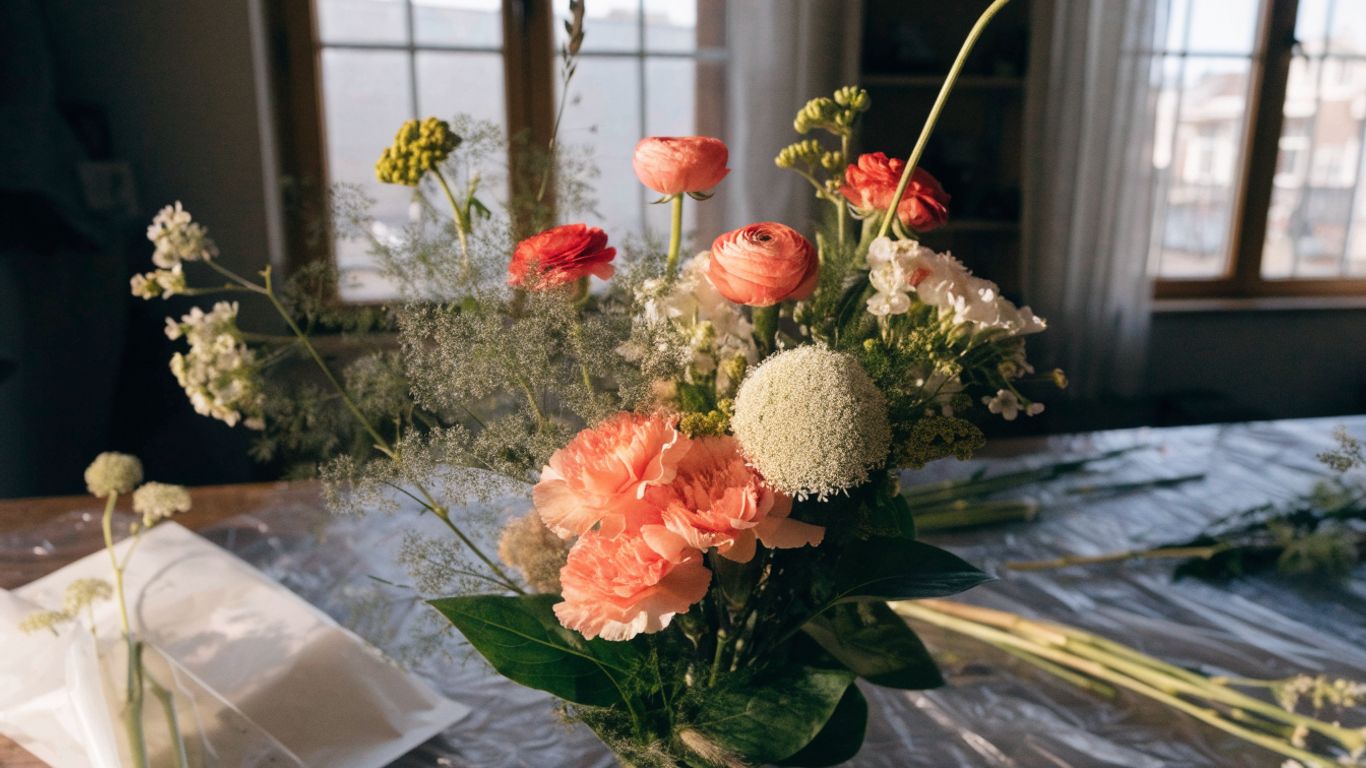
Seasonal availability can influence color, variety, and price, so ask what flowers are currently in good condition. A florist should be able to explain whether a design uses specific blooms or takes its character from a broader palette and shape. If you are browsing online, look for descriptions that make the arrangement’s style and approximate scale clear. For another local point of comparison, Wildberry Flowers presents seasonal bouquets and delivery information; confirm any current offer and timing directly with the florist you choose.
Explore arrangements for different styles and budgets
Think about the recipient’s taste before settling on a style: loose and garden-like, structured, softly colored, or bright and contrasting. Then compare arrangements at similar price points, checking what the displayed size actually means rather than relying on labels such as “small” or “premium.” A guide to Altona florist options may give you ideas about styles and occasions to ask a local shop about. The final choice should feel right for the person receiving it, not just for the product photo.
Ask about substitutions when blooms are unavailable
Flowers are perishable and availability can shift, so it is sensible to ask what happens if a particular bloom cannot be sourced. Find out whether the florist will substitute a similar color, type, or overall value, and whether they will contact you before making a significant change. This is especially helpful when a particular flower has personal meaning. Agreeing on the approach in advance keeps the design flexible without leaving the result entirely to chance.
Match the shop to your occasion
The right arrangement depends on the reason for sending it and on how well the florist can guide you toward an appropriate choice. A cheerful birthday bouquet, a restrained sympathy arrangement, and flowers for a large event call for different questions. Explain the occasion and your budget plainly, then listen for practical suggestions rather than choosing by category label alone. A thoughtful shop will help you make the design feel personal while keeping expectations clear.
Choose flowers for birthdays and anniversaries
For birthdays, consider the recipient’s favorite colors, flower types, and general style; a bright mixed bouquet may suit one person, while a quieter arrangement may be more their taste. Anniversaries often carry their own traditions, but you do not have to follow a particular flower convention if another choice feels more personal. Tell the florist what you are celebrating and whether you want a classic look or something less formal. If you do not know the recipient’s preferences, a balanced seasonal arrangement is a reasonable place to start.
Find suitable arrangements for sympathy and get-well wishes
For sympathy flowers, a simple, considered design is often a safer choice than something highly elaborate, though family and cultural preferences differ. If the flowers are going to a service or care facility, check any delivery rules and timing before ordering. Get-well arrangements should suit the recipient’s setting; ask whether the destination accepts flowers and whether a compact design would be more practical. A brief explanation of the relationship and circumstances can help the florist recommend an appropriate tone.
Consider custom designs for weddings and special events
For a wedding or event, ask whether the florist takes custom work and how far ahead a consultation should happen. Bring reference images, venue details, a color palette, and an approximate budget so the discussion has something concrete to work from. Ask what is included in the proposal and how the shop handles seasonal changes. Larger floral work needs more coordination than a single bouquet, so make sure the scope and timing are agreed in writing.
Compare delivery and pickup options
A beautiful arrangement is only part of the order; it also needs to reach the right place at a useful time. Ask how delivery works for the specific address and date, and whether someone needs to be present to receive it. If you are collecting the flowers, confirm when they will be ready and how long they can wait before pickup. These details are worth checking early, particularly when the flowers are tied to a service, party, or other fixed event.
Confirm delivery coverage for your address
Provide the full delivery address, including a unit number, business name, or access instructions where relevant. Do not assume that an advertised local delivery service covers every nearby suburb; ask the florist to confirm the destination before you pay. For apartments, hospitals, and workplaces, check reception or drop-off rules so the flowers do not end up somewhere unexpected. A clear address and a reachable phone number can make delivery smoother.
Check same-day order cutoffs and availability
Same-day service, when offered, usually depends on the order time, delivery area, and stock available that day. Contact the shop early and ask whether the arrangement you want can be made and delivered on schedule. If you are ordering close to a holiday or event, be ready to consider a similar design if your first choice is unavailable. Do not treat a general same-day message as a guarantee for every address and order.
Review pickup timing and delivery fees
Before choosing a delivery window or pickup, compare what each option means for your plans. The details are easier to assess when you ask about timing, fees, and any conditions together. For broader service comparisons, readers may encounter international moving services, where timing, reviews, and pricing are also factors; for flower orders, confirm the florist’s own terms rather than assuming those services work alike. The practical question is whether the option gets the flowers where they need to be without adding a surprise charge.
Understand pricing before you order
A displayed price is only useful if you know what arrangement size and service it covers. Compare like with like: the number or scale of stems, the container, and whether delivery is included can all affect the total. Ask for the final amount before confirming, including any applicable taxes and service charges. A clear price conversation should leave you knowing what to expect, not guessing from a thumbnail image.
Compare bouquet sizes and what each includes
Labels such as small, medium, and large are not consistent across shops, so ask what changes between the available sizes. The florist may be able to explain the difference in stem count, overall dimensions, or the balance of focal flowers and foliage. This simple comparison can help match the spend to the occasion without assuming that a larger label means a specific number of blooms. Use the shop’s own descriptions as the basis for your decision.
| What to compare | What to ask | Why it helps |
|---|---|---|
| Size | What changes between sizes? | Clarifies the scale of the gift. |
| Flowers | Which blooms are included or seasonal? | Sets expectations about the design. |
| Presentation | Is a vase or wrapping included? | Makes the contents of the price clearer. |
| Delivery | Is the fee included in the displayed total? | Helps you understand the final cost. |
Once you have those details, compare the total rather than the headline price alone. If something is unclear, ask before placing the order; a short answer now is easier than sorting out a mismatch later.
Check for service fees, taxes, and delivery charges
Ask for the complete total and whether it includes delivery, taxes, or any other service charge. Delivery fees may vary by address or timing, so state where the flowers are going before comparing quotes. This is a general habit in any purchase involving several cost components: pages about different bank types, for example, also encourage readers to compare fees and services, though banking and florist pricing are separate matters. For a bouquet, rely on the shop’s itemized order total.
Ask how the shop handles changes or cancellations
Before paying, find out whether you can change the delivery address, message, or flower selection after placing the order. Ask about cancellation deadlines and whether a custom design or prepared order is treated differently. Policies may depend on how much work has already begun, so a clear answer is more useful than assuming every order can be changed. Keep a note of the terms and the contact route the florist gives you.
Place an order with confidence
A careful order is mostly a matter of communicating the right information and checking it before submission. Give the florist enough context to make a suitable arrangement, but keep delivery instructions direct and readable. If any detail is time-sensitive, ask the shop to confirm it rather than relying on an automated confirmation alone. Once the order is placed, keep the receipt and a way to contact the business.
Share the recipient’s preferences and delivery details
Mention any known favorite colors, flowers, or styles, as well as allergies or other relevant preferences the recipient has shared. Add the complete address, the recipient’s name, and a phone number if appropriate. Include access details for apartments or workplaces, and verify the date and delivery window. A florist can use clear preferences as guidance, but avoid treating a reference image as a promise that every bloom will match exactly.
Add a clear message for the florist
Keep the card message concise and check names, spelling, and punctuation before submitting it. If you have a design request, distinguish that instruction from the words meant for the recipient so the two are not confused. Here, a quick review of the key details can prevent an avoidable mistake. Workflow tools such as Microsoft Power Automate are a separate business topic; for a flower order, use the florist’s own ordering and confirmation process.
Confirm the order and keep the shop’s contact information
After submitting, review the confirmation for the recipient, address, date, selected arrangement, and total price. If a confirmation does not arrive or an important detail looks wrong, contact the florist promptly using the number or email shown on its official site. Before checkout, it can help to run through a short final check:
- Is the recipient’s full address accurate?
- Is the delivery or pickup date correct?
- Does the card message read as intended?
- Does the total include the charges you expected?
Once those points are settled, save the order confirmation and the florist’s contact details. That gives you a useful reference if plans change or you need to ask a follow-up question.
Conclusion
Choosing a local florist is less about finding the closest pin on a map and more about finding a shop that fits the occasion, budget, and timing. Check recent work, ask direct questions about availability and delivery, and confirm the full order before paying. With those details in hand, you can choose flowers that feel considered and arrive with fewer surprises.
Frequently Asked Questions
How do I find a flower shop near me in Altona?
Search map listings for local options, then check each shop’s service area, hours, recent reviews, and arrangements. Confirm delivery coverage directly if you are ordering for someone else.
How far ahead should I order flowers?
For an ordinary bouquet, a little notice gives you more choice. Weddings, events, holidays, and specific flower requests usually benefit from ordering earlier; ask the florist what lead time applies.
Can I request a specific flower or color?
Yes, you can ask, but availability may depend on the season and the order date. Ask whether the florist can use your preferred blooms or suggest a similar alternative.
What should I check before arranging flower delivery?
Confirm the full address, delivery date, recipient contact details, coverage, timing, and fee. If the destination is a hospital, office, or apartment building, check its drop-off rules too.
Is same-day flower delivery always available?
No. Same-day options can depend on the cutoff time, delivery location, workload, and flowers in stock. Contact the shop early to confirm what is possible for your order.
How can I compare florist prices fairly?
Compare the arrangement size and inclusions, not just the listed price. Ask whether the displayed amount includes delivery, taxes, and other charges, then check the final total before confirming.
What information should I include when ordering flowers?
Provide the recipient’s name and complete address, a correct delivery date, any useful access details, and a clear card message. Share preferences or relevant restrictions that can help the florist prepare the order.