Key Takeaways
Choosing an Altona florist for weddings becomes easier when your style, priorities, budget, and logistics are clear from the beginning.
- Start with the feeling, colors, and overall style you want to create.
- Review real wedding work and ask about experience with your venue and guest count.
- Separate essential flowers from decorative extras before comparing proposals.
- Discuss seasonal availability, delivery, setup, and timing in practical terms.
- Confirm every flower choice and payment detail in writing before the wedding day.
Define your wedding flower vision and priorities
Flowers work best when they support the atmosphere of the celebration rather than compete with it. Before contacting florists, collect a few visual references and describe how you want the ceremony and reception to feel. A clear direction gives a designer room to make thoughtful choices without forcing you to decide every stem yourself.
Match flowers to your wedding style
Begin with the character of the day: relaxed and garden-inspired, polished and contemporary, softly romantic, or bold and colorful. Look at the dress, stationery, venue architecture, and décor together, since flowers should feel like part of the same visual language. You do not need a fixed flower list yet; a style description is often more useful in the first conversation.
Choose a color palette that complements the venue
Take note of the venue’s walls, flooring, furniture, and natural light before settling on colors. Warm rooms may suit ivory, peach, terracotta, or foliage, while a bright modern space can carry stronger contrast. Keep one or two anchor colors and add supporting shades so the arrangements feel layered rather than overly matched.
Prioritize must-have floral arrangements
Make a short list of the flowers that matter most to you, then rank everything else. Perhaps the bouquet and ceremony backdrop are central, while guest-table arrangements can be simpler. A focused priority list helps your florist protect the elements guests will notice most when the budget or flower supply requires a compromise.
Set realistic expectations for seasonal availability
Seasonal flowers usually offer the strongest starting point for a wedding design, but availability can vary with weather and supply. Share your wedding date early and ask for comparable alternatives rather than becoming attached to one exact variety. A flexible approach can preserve the shape, color, and mood of your inspiration while keeping the proposal practical.
For additional ideas on seasonal choices and personal touches, browse this guide to wedding flowers in Altona before your consultation.
Evaluate Altona wedding florists
Choosing a florist is partly a creative decision and partly a test of reliability. You want to see work that feels close to your scale and style, while also learning how the florist handles communication and event logistics. Treat the first conversation as a chance to assess whether the working relationship feels calm and clear.
Review portfolios for real wedding examples
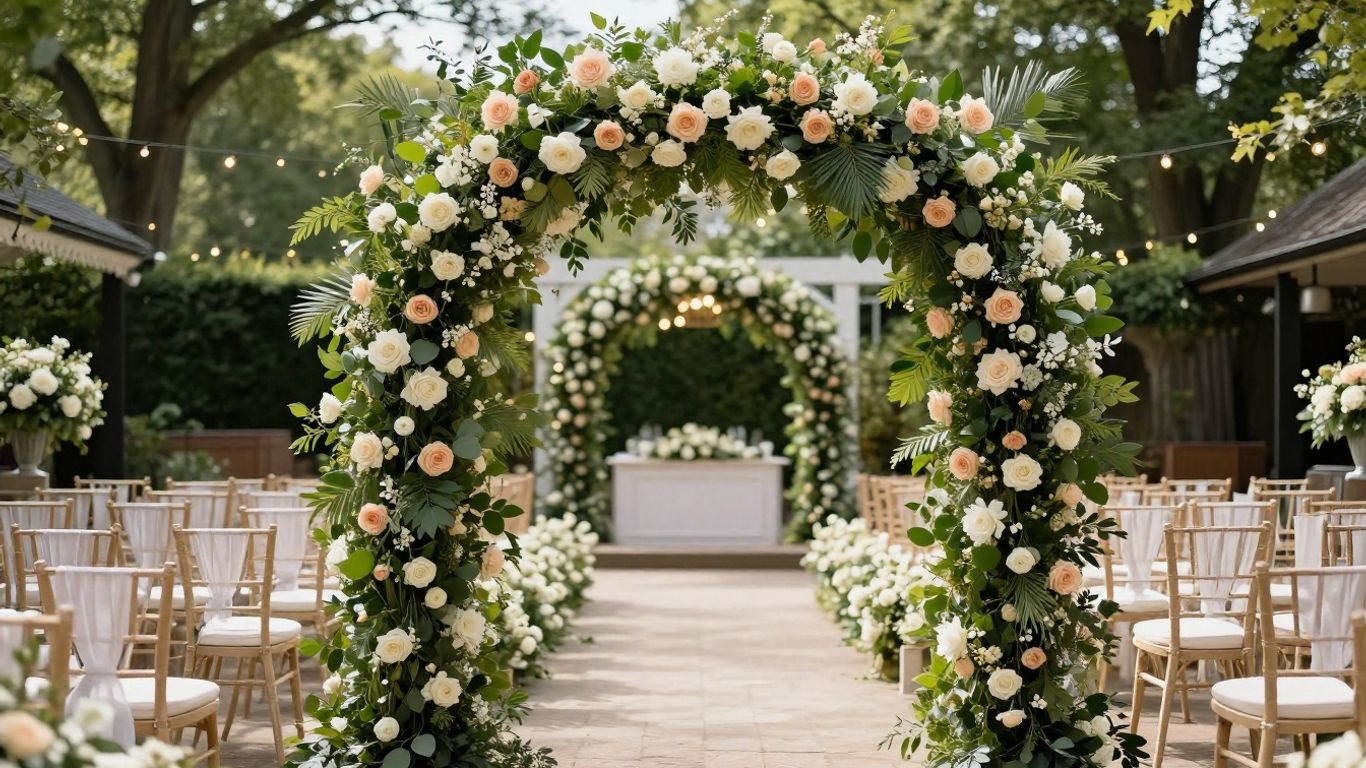
Ask to see complete wedding galleries rather than only close-up photographs of individual bouquets. Full galleries reveal how bouquets, ceremony flowers, tables, and small details work together across a venue. When reviewing Flowers Altona, look for documented examples of custom bridal bouquets, ceremony arches, and reception centrepieces that align with the kind of celebration you are planning.
Check experience with venues and wedding sizes
A florist who understands your venue can anticipate access points, installation restrictions, weather exposure, and the time needed for setup. Ask whether they have worked with a similar guest count and whether the arrangements will be assembled on site or prepared elsewhere. These details matter just as much for an intimate ceremony as they do for a large reception.
Read recent client reviews and testimonials
Reviews can help you spot patterns in punctuality, responsiveness, flower freshness, and how closely the final work matched the agreed design. Read several recent comments rather than relying on one glowing sentence. Pay attention to whether clients describe a clear process, especially around changes and wedding-day delivery.
Compare services, communication, and availability
Ask each florist the same practical questions so the proposals are genuinely comparable. Confirm whether the service includes design, delivery, setup, collection, or breakdown, and ask who will be your main contact. Flowers Altona describes a personal response and a Dream, Design, and Collect process, including click and collect from its Altona location; confirm which parts apply to your own order and timeline.
A simple comparison can keep the decision grounded in more than photographs. Note what is included, what is optional, and how quickly each florist answers specific questions before you choose.
Plan your wedding flower budget
Wedding flower pricing depends on flower varieties, quantities, design complexity, season, labor, and the amount of installation required. Rather than searching for one universal figure, build a working budget around the moments you most want to shape. A useful proposal should make it possible to see where your money is going.
Understand the typical cost of wedding flowers
The total can include personal flowers, ceremony décor, reception arrangements, delivery, setup, vessels, mechanics, and labor. Larger installations and designs that need to be built on site generally require more time than simple arrangements. Request an itemized proposal and ask which costs are estimates, which are fixed, and what might change if flower substitutions become necessary.
Separate essential arrangements from optional upgrades
Start with the pieces that serve a clear purpose: bouquets, boutonnieres, ceremony focal points, and reception flowers. Then consider upgrades such as larger installations, extra cocktail arrangements, upgraded vessels, or more elaborate table designs. This order lets you reduce or expand the plan without losing the visual thread of the day.
Ask about delivery, setup, and breakdown fees
A low arrangement price may not reflect the full event service. Ask whether the quote includes transport, venue access, setup, removal of rental items, and disposal or breakdown after the reception. Put the answer beside each proposal so you are comparing complete costs rather than attractive but incomplete starting numbers.
Build a contingency amount for last-minute changes
Reserve a modest amount for changes such as an updated guest count, extra corsages, weather-related adjustments, or a necessary flower substitution. You can also ask how approval works if a change becomes necessary close to the wedding. A written process reduces surprises and keeps a small decision from becoming a stressful one.
Use this quick checklist when reading a proposal:
- Arrangement quantities and dimensions are clearly stated.
- Flower varieties or approved substitution standards are listed.
- Delivery, setup, rentals, and breakdown are identified.
- Taxes, payment dates, and cancellation terms are easy to find.
Once these items are clear, you can decide whether to simplify the design or invest more in a particular focal point without guessing at the final total.
Select bouquets and personal flowers
Personal flowers appear in many of the day’s most photographed moments, so proportion and comfort deserve as much attention as color. Bring a photograph or description of the dress, suit, accessories, and wedding-party attire. The best choices feel intentional while still being easy to carry, wear, and enjoy for several hours.
Coordinate the bridal bouquet with the dress
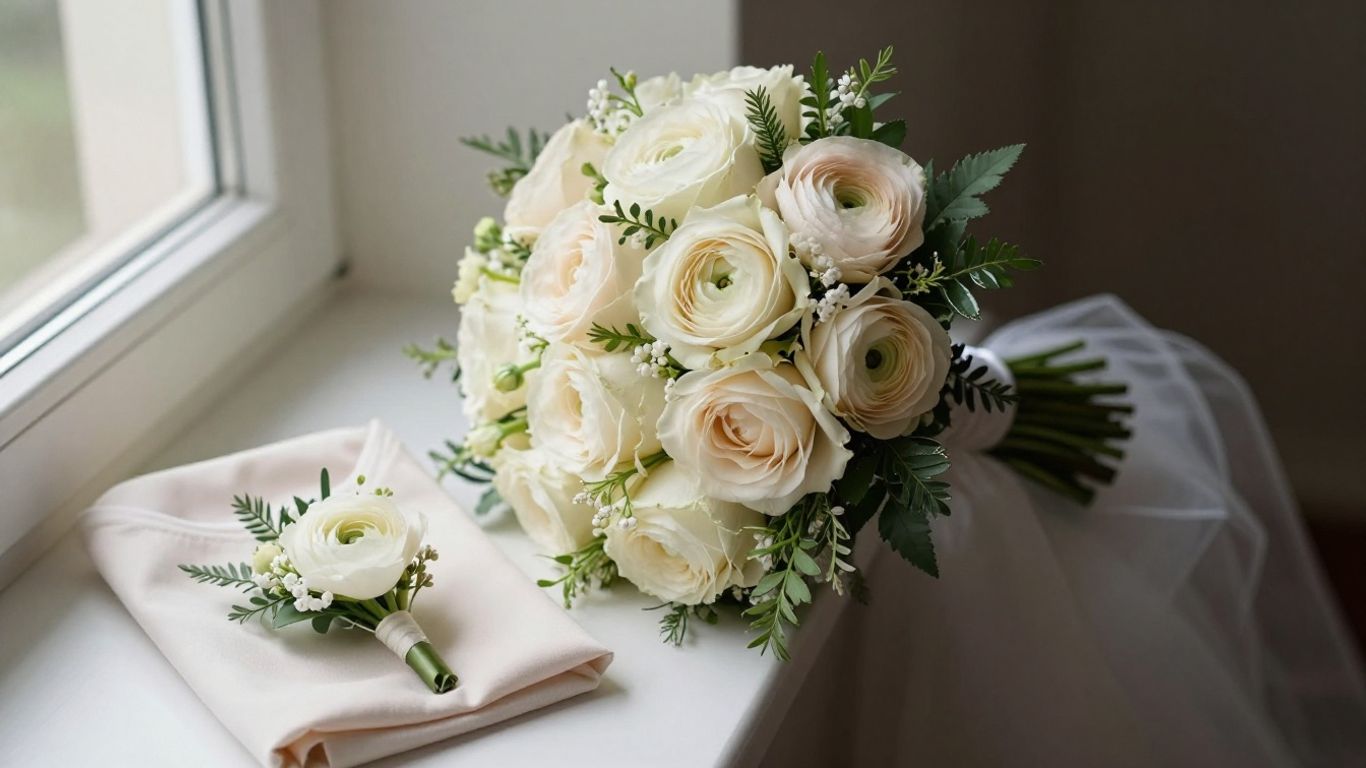
Consider the silhouette and detailing of the dress before choosing bouquet size and shape. A fluid bouquet can complement a relaxed gown, while a more structured arrangement may suit clean tailoring or formal styling. Ask for a design that photographs well from several angles and does not hide important dress details.
Choose bouquets for the wedding party
Wedding-party bouquets do not have to be identical to the bridal bouquet. They can repeat its flowers in smaller proportions, use a simpler shape, or introduce a supporting color. Keep the scale consistent with each person’s height and attire so the group looks coordinated without appearing uniform.
Plan boutonnieres and corsages
Boutonnieres and corsages should be light, secure, and comfortable against clothing or the wrist. Choose flowers that hold up well through photographs, greetings, and movement, and confirm who will receive each piece. Small changes in ribbon, foliage, or flower variety can distinguish family members while preserving the overall palette.
Consider flowers for children and family members
If children or additional relatives will take part, decide whether they need a small bouquet, floral wristlet, hair flowers, or another simple detail. Keep children’s pieces especially lightweight and avoid anything awkward to hold. Flowers Altona lists bridal bouquets and buttonholes among its wedding work, so ask directly whether the personal items on your list can be included in the same design plan.
Design ceremony and reception arrangements
The ceremony and reception should feel connected, even if they take place in different parts of the venue. Repeating a flower, foliage texture, vessel color, or ribbon detail is often enough to create continuity. Start with the spaces guests will enter, gather, and photograph in, then add smaller accents where they will have the most effect.
Create an inviting ceremony entrance
The entrance sets expectations before guests reach their seats. A pair of arrangements, a low installation, or flowers placed near the doorway can frame the arrival without obstructing movement. Consider the width of the entrance and the direction of traffic so the design feels welcoming rather than crowded.
Decorate the aisle and ceremony backdrop
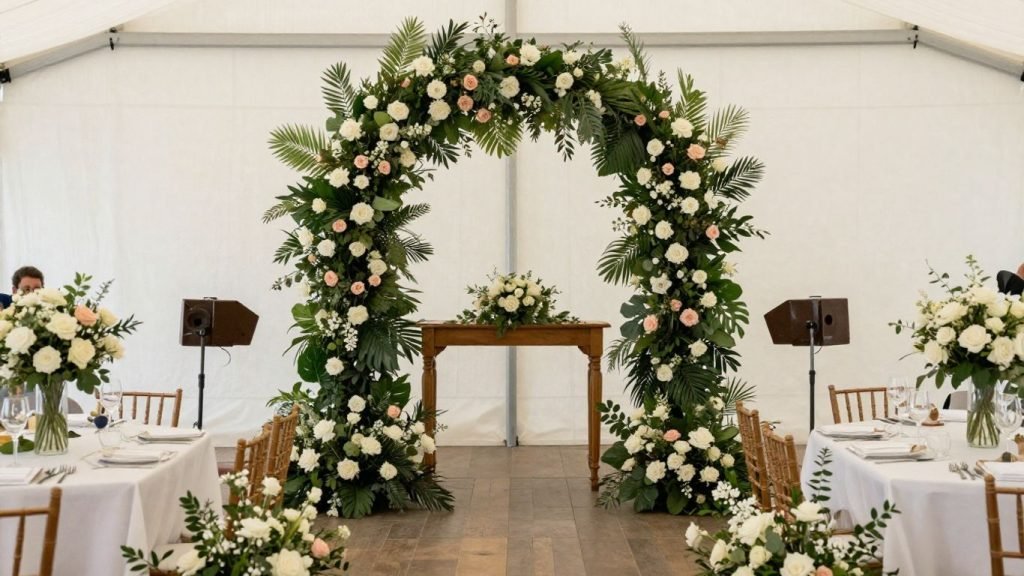
Choose aisle flowers according to the venue’s rules and the amount of reuse you want afterward. A few concentrated clusters may be more impactful than evenly spaced pieces, while a backdrop can define the ceremony photographs and later become a reception feature. Confirm how anything attached to chairs, walls, or structures will be secured and removed.
Style reception tables and centerpieces
Centerpieces should leave enough room for conversation, place settings, and shared dishes. Low arrangements are practical for visibility, while taller designs can work when their height and footprint are carefully planned. Use the guest count, table shape, and candle or décor placement to determine how many arrangements are genuinely needed.
Add flowers to the cake, bar, and welcome areas
Small floral details can make secondary spaces feel considered without expanding the entire design. A few stems on the cake table, a compact bar arrangement, or flowers near the welcome display may be enough. Ask the florist and baker how flowers will be prepared for food-adjacent areas, and confirm who places cake flowers on the day.
For a florist offering documented wedding services, Flowers Altona describes custom bouquets, ceremony arches, and reception centrepieces designed around a couple’s vision and colors. Treat those examples as a starting point for questions, then make sure your own proposal spells out the exact arrangements and services included.
Finalize the details with your florist
A good final stage turns a creative conversation into a shared production plan. Keep one current document with the approved palette, arrangement quantities, venue contacts, delivery instructions, and payment schedule. This gives everyone a single reference when small changes appear during the last weeks.
Schedule a consultation and bring inspiration
Bring venue photographs, a floor plan if available, dress or attire details, and a short list of priorities. A handful of references is more useful than a large folder of unrelated images, especially when you can explain what you like about each one. Ask the florist to describe the proposed shapes, textures, and substitutions in plain language.
Confirm the proposal, contract, and payment terms
Read the proposal alongside the contract and check that the agreed arrangements, quantities, colors, rentals, and services appear in both. Clarify deposit requirements, final payment timing, cancellation terms, substitution policy, and responsibility for hired vessels. Flowers Altona’s documented wedding process includes dreaming, designing, and collecting; regardless of the service format you select, confirm the exact commitments in writing.
Review the delivery and setup timeline
Create a timeline that includes flower preparation, delivery arrival, venue access, installation, photography, and any handoff to the wedding party. Give the florist a named venue contact and clear loading instructions. If flowers move from the ceremony to the reception, decide who handles that transition and when it can happen without disrupting guests.
Reconfirm flower choices before the wedding day
A final check should cover the wedding date, delivery address, contact numbers, guest count, arrangement list, and approved substitutions. Revisit any flowers affected by season or supply, but avoid making unnecessary changes simply because another image caught your eye. Once the details are confirmed, let the florist work from the agreed plan and focus your energy on the celebration.
Conclusion
The right Altona florist for weddings will understand your visual priorities, explain the practical costs, and communicate clearly about flowers, timing, and venue logistics. Compare complete proposals, leave room for seasonal flexibility, and choose the team whose process makes you feel confident well before the day arrives.
Frequently Asked Questions
When should I book a florist for my wedding?
Many couples begin conversations several months before the wedding, especially for popular dates or larger installations. Booking earlier gives you more time to shape the design and discuss seasonal availability.
How do I choose wedding flower colors?
Start with the venue, attire, and overall mood, then select one or two main colors with complementary shades. Sample swatches or venue photographs can help you judge the palette more accurately.
What flowers are usually needed for a wedding?
Common categories include bouquets, boutonnieres, corsages, ceremony arrangements, reception centerpieces, and accents for areas such as the cake or welcome table. The exact list depends on your ceremony and reception layout.
Should I use only flowers that are in season?
Seasonal flowers are often a practical choice, but you do not have to limit the design to them. Ask about comparable alternatives that provide a similar color, shape, or texture if a preferred variety is unavailable.
What should a florist proposal include?
A proposal should identify arrangements, quantities, flower or substitution details, rentals, delivery, setup, breakdown, taxes, payment dates, and relevant terms. Ask questions about anything that remains vague.
How can I keep wedding flower costs under control?
Prioritize the arrangements with the greatest visual or personal value, reuse ceremony pieces when possible, and simplify low-impact areas. An itemized proposal makes it easier to adjust the plan thoughtfully.
What should I bring to a florist consultation?
Bring your wedding date, venue information, estimated guest count, attire details, inspiration images, color ideas, and a working budget. It also helps to bring a ranked list of must-have arrangements.