Key Takeaways
A successful western suburbs flower delivery order depends on more than choosing a pretty bouquet. Check the service area, delivery terms, bouquet fit, total cost, and recipient details before paying.
- Confirm the exact address and delivery window before ordering.
- Match the flowers and colors to the occasion and recipient.
- Compare florist policies, arrangement photos, and final prices.
- Include practical instructions for apartments, offices, hospitals, and gated communities.
- Order earlier during major holidays and other peak periods.
Understand western suburbs flower delivery coverage and timing
Delivery coverage can change from one suburb, ZIP code, or neighborhood to the next. A florist may serve nearby communities but use different delivery days or fees for each one. Start with the address, then check the available timing before becoming attached to a particular arrangement.
Check whether your address is within the florist’s service area
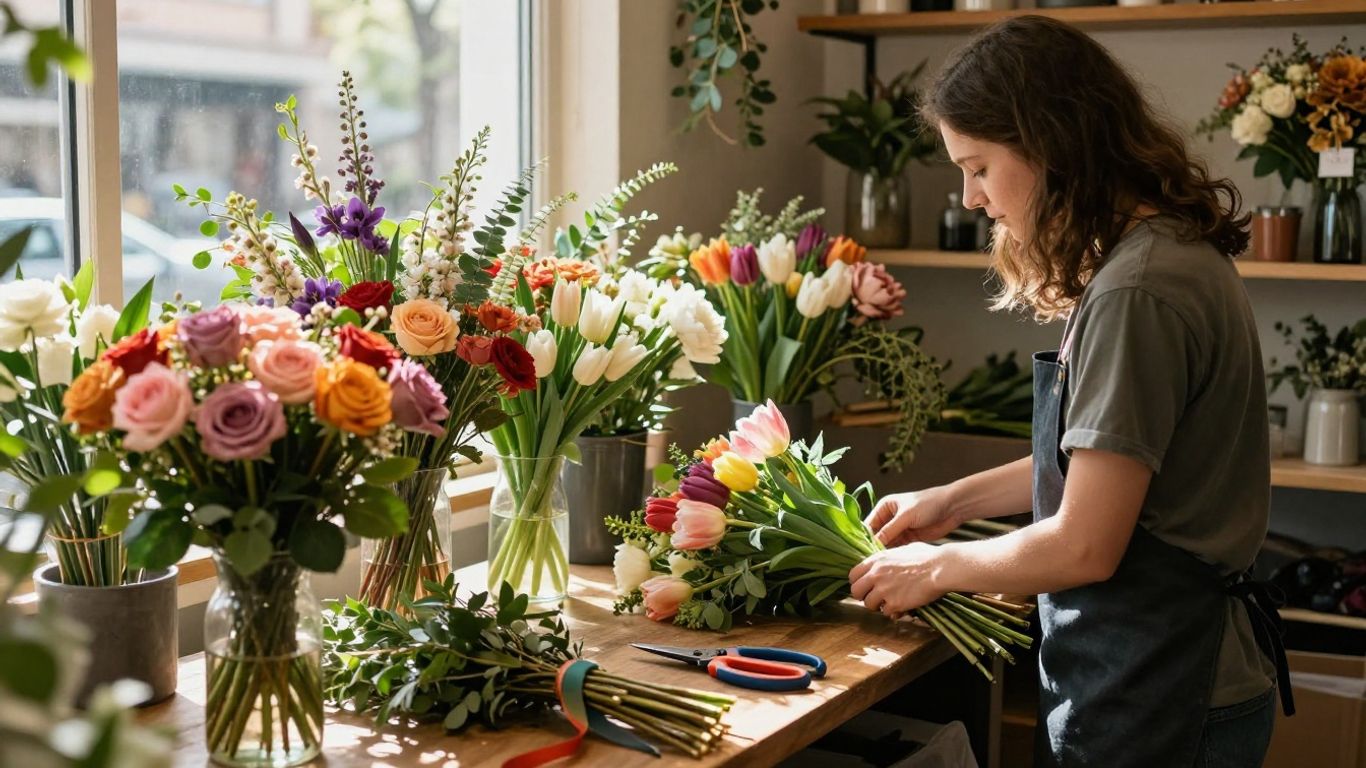
Enter the complete delivery address into the florist’s website, or call if the online checker is unclear. Ask whether the service includes the recipient’s ZIP code, and whether the address is treated as a local delivery, extended-area delivery, or shipped order. This matters especially for hospitals, campuses, office parks, and suburbs near the edge of a delivery zone.
A local florist’s delivery map is more useful than a vague promise to serve the wider area. For example, Phillip’s Flowers lists specific Chicago-area communities and surrounding locations, which gives shoppers a clearer starting point than a general metro-area label.
Compare same-day, next-day, and scheduled delivery windows
Same-day delivery is convenient, but it usually comes with a cutoff and may offer less control over the exact arrival time. Next-day service can provide a broader arrangement selection, while scheduled delivery is better when the occasion is known well in advance. Read whether a stated window means arrival by a certain time or simply delivery sometime during the day.
Use the delivery choice as part of the bouquet decision rather than treating it as a final checkout detail. If the flowers are going to a workplace, a narrower window may be more valuable than a larger arrangement; for a home delivery, flexibility may matter more.
Review cutoff times, delivery fees, and holiday restrictions
Delivery pages often separate the bouquet price from the delivery charge, service fee, and holiday surcharge. Check all of them before comparing one florist with another. Also look for restrictions on Sundays, major holidays, rural addresses, and deliveries to buildings that require recipient coordination.
A florist’s published policy should explain what happens when an order misses the same-day cutoff or when the requested date is unavailable. Kremp Florist, for instance, distinguishes same-day service from its broader selection of occasion-based arrangements, a useful reminder to check speed and range separately.
Choose flowers that fit the occasion
The right bouquet feels intentional, even when it is ordered quickly. Occasion, relationship, color, and the recipient’s surroundings all affect whether a design feels warm, celebratory, restrained, or overly formal. Begin with the message you want the flowers to convey, then choose the style and size.
Match bouquet styles to birthdays, anniversaries, and sympathy
Bright mixed flowers, cheerful seasonal stems, or a vase arrangement generally suit birthdays and congratulations. Anniversaries may call for romantic colors or a more refined design, while sympathy flowers are usually quieter and should respect the family’s wishes and the setting. If the flowers are going to a service, confirm whether a standing spray, wreath, vase, or smaller arrangement is appropriate.
The card message should support the occasion without competing with it. A short, personal sentence often works better than a generic phrase, especially when the flowers are being sent during a difficult moment.
Consider seasonal flowers and local availability
Seasonal blooms can look fresher and may offer better value than flowers that are difficult to source at a particular time of year. They also give the florist more flexibility when building a design around current inventory. If a specific flower matters, ask whether it is guaranteed or simply shown as an example of the arrangement’s style.
Seasonality does not mean the bouquet has to look casual. A florist can often create a polished design with locally available flowers by adjusting texture, color balance, and foliage.
Account for allergies, pets, and the recipient’s preferences
When you know the recipient’s preferences, use them. Mention favorite colors, disliked flowers, fragrance sensitivities, or a preference for plants instead of cut stems. If pets may reach the arrangement, ask the florist whether the selected flowers are suitable for that household and place the bouquet somewhere inaccessible until you can verify the details.
A simple note about allergies or fragrance can prevent an otherwise thoughtful gift from becoming inconvenient. When information is limited, a lower-fragrance design with a varied but restrained palette is often a considerate choice.
Compare local florists and online ordering options
Local florists and online marketplaces can both be useful, but they are not identical ordering experiences. A neighborhood shop may offer direct communication and more practical knowledge of local buildings, while a marketplace may make browsing and payment especially simple. Compare the service behind the product, not only the photograph on the product page.
Weigh independent florists against national flower marketplaces
An independent florist may be able to discuss substitutions, delivery complications, and design preferences before the order is finalized. A larger marketplace can offer a wide catalog and standardized checkout, though the actual arrangement may be fulfilled by a local shop. Check who is responsible for delivery and customer support before placing the order.
Search results can also mix relevant florist pages with unrelated buying advice, so keep the comparison focused. For example, 3PL companies, startup platform choices, Brisbane business phone systems, and gentle body-brush techniques address entirely different decisions and should not be treated as flower-delivery guidance.
Evaluate reviews, arrangement photos, and customer policies
Reviews are most useful when they describe delivery accuracy, freshness, communication, and how substitutions were handled. Look for recent comments rather than relying on a single dramatic review. Arrangement photos can help you judge the florist’s design style, but remember that flower availability and natural variation may affect the delivered result.
Read the replacement, refund, and complaint policies before ordering. Woyshner’s Flower Shop asks customers to check delivery ZIP codes before ordering, a practical policy detail that illustrates why service information deserves as much attention as bouquet photography.
Look for customization, add-ons, and gift message options
Customization may include color preferences, vase choices, flower substitutions, plants, chocolates, balloons, or a handwritten card. Decide which extras genuinely improve the gift rather than adding items automatically. The best option is usually one that feels personal without making the order difficult to deliver.
Before checkout, review the message character limit and confirm whether add-ons arrive with the flowers or separately. If the recipient is in an office or hospital, a compact arrangement may be more useful than a large collection of extras.
Evaluate bouquet quality and overall value
A low starting price does not always mean a lower-quality bouquet, just as a larger arrangement is not automatically better value. Compare the design’s approximate size, flower variety, container, and delivery terms together. The goal is a bouquet that arrives fresh, suits the occasion, and fits the budget without surprises.
Compare prices by arrangement size and flower variety
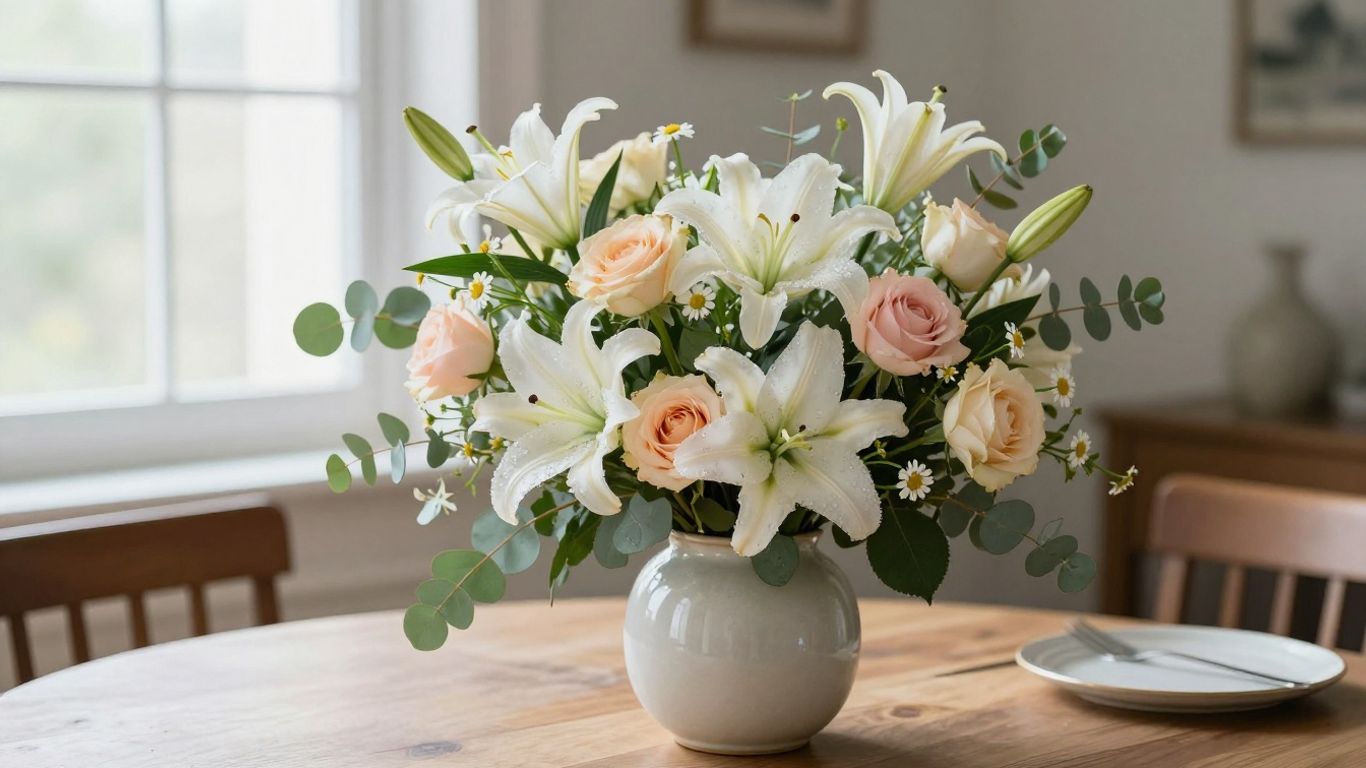
Product photos can make two arrangements look similar even when their stem counts, vase sizes, or flower varieties differ. Read the dimensions and product description, then compare arrangements within the same general category. A modest design with distinctive seasonal flowers may feel more generous than a larger bouquet built from a limited selection.
A useful comparison starts with the details that are easy to overlook:
- Approximate height and width of the arrangement.
- Main flowers, filler flowers, and greenery included.
- Vase, basket, or container included in the listed price.
- Available sizes and the difference between each upgrade.
After checking those details, you can judge whether an upgrade changes the visual impact or merely adds volume. That distinction helps keep the order thoughtful rather than unnecessarily expensive.
Understand substitution policies and freshness guarantees
Flowers may need to be substituted because of weather, supply, or quality at the time of design. A reasonable policy explains whether the florist will preserve the overall color palette, flower type, size, or value. If the arrangement is for a sensitive occasion, ask how much discretion the designer has and whether the recipient or sender will be contacted.
Freshness language should also be specific enough to be useful. Look for instructions about care, what to do if flowers arrive damaged, and how quickly a concern must be reported. Those terms provide more protection than a broad claim that every bouquet will look exactly like the photograph.
Calculate the full cost with delivery, service, and add-on fees
Add the arrangement, delivery, service charge, tax, card, vase upgrade, and any other extras before deciding which option is affordable. Some florists show the full total early, while others reveal additional charges at checkout. Comparing final totals is the fairest way to compare local shops with online ordering platforms.
Save the confirmation email and check the delivery date, recipient details, and selected product. A few minutes of review can prevent an avoidable correction fee or a second delivery charge.
Provide accurate delivery instructions
Good delivery instructions reduce uncertainty for both the florist and the recipient. Include the information a driver needs to find the right entrance, reach the right person, and leave the flowers somewhere secure if handoff is not possible. Avoid relying on assumptions about a building that the delivery team may not know.
Confirm the recipient’s address, building access, and contact details
Verify the street number, unit or suite, ZIP code, recipient name, and phone number. For an office or campus, include the department, floor, reception desk, or room number. If the recipient is in a hospital, confirm the facility’s rules for flowers and provide the patient’s full name and department when permitted.
Use the recipient’s number for delivery coordination, but add the sender’s contact information as well. That gives the florist a backup person to reach if an address problem appears after the order is submitted.
Choose a safe drop-off location when no one is home
A front porch is not always the safest option, particularly in apartments, busy streets, or areas exposed to heat and rain. Ask whether the florist can leave the bouquet with a doorman, reception desk, neighbor, or other sheltered location. If no safe option exists, a call-ahead delivery may be preferable to an unattended drop-off.
The instruction should be specific but not restrictive. “Leave with the building concierge” is more useful than “please leave somewhere safe,” while still allowing the driver to follow the property’s normal procedure.
Add delivery notes for offices, hospitals, apartments, and gated communities
Different destinations need different notes, and a short practical instruction can save considerable time. State the entrance to use, where parking or loading is allowed, and whether a call is needed at arrival. For gated communities, include the gate code only through the florist’s secure order process, not in a publicly visible card message.
Mention delivery constraints before payment, especially for hospitals and large office buildings. If a location cannot accept flowers on a particular day, moving the delivery date is usually easier than trying to correct the order after the driver is already en route.
Make your flower delivery more personal and reliable
Personalization does not require an elaborate bouquet. A color the recipient loves, a flower connected to a shared memory, or a message written in your own voice can make a standard arrangement feel carefully chosen. Reliability comes from pairing that personal touch with realistic timing and complete order details.
Select colors, flowers, and designs that reflect the recipient
Think about the recipient’s home, desk, clothing, or usual taste. Soft neutrals may suit someone with a simple style, while vivid colors can work for a lively birthday or celebration. If you are unsure, tell the florist what you do know—favorite color, preferred mood, and where the flowers will be displayed—and let the designer make the final combination.
Personal details are most effective when they remain practical. A compact vase arrangement may be a better expression of care than a dramatic design that has nowhere convenient to sit.
Schedule recurring deliveries for holidays and special occasions
Recurring orders can help with anniversaries, birthdays, congratulations, or regular gestures of appreciation. Create a calendar of dates and decide how far ahead each order should be placed. Review the arrangement and delivery details each time rather than assuming an old address or preference still applies.
For recurring gifts, variety is part of the appeal. Rotate colors, flower styles, and container types so the deliveries feel considered instead of repeated, and pause the schedule when the recipient will be away.
Order early for Valentine’s Day, Mother’s Day, and other peak periods
Major holidays bring heavier order volume, tighter delivery capacity, and more substitution pressure. Ordering early gives you a better selection of designs and delivery windows. It also leaves time to correct an address, change a card message, or choose another florist if the original date is unavailable.
For a last-minute order, be flexible about flower variety and delivery time while keeping the budget and occasion clear. That combination gives the florist room to make a good arrangement without promising details that may not be available.
Conclusion
The best western suburbs flower delivery choice balances a suitable bouquet with dependable coverage, transparent pricing, clear instructions, and timing that fits the occasion. Check the practical details first, then add the personal touches that make the gift feel like it came from you.
Frequently Asked Questions
How far in advance should I order flowers?
For an ordinary day, ordering one or two days ahead usually gives you more choice. For Valentine’s Day, Mother’s Day, and other busy periods, order several days or more in advance when possible.
Can I request same-day flower delivery?
Many florists offer same-day service within selected areas, but availability depends on the address, order time, inventory, and delivery capacity. Check the cutoff and final delivery window before paying.
What information does a florist need for delivery?
Provide the recipient’s full name, street address, unit or suite, ZIP code, phone number, and any building or access instructions. Office, hospital, and campus deliveries may need department or room details as well.
What happens if the recipient is not home?
The florist may leave the flowers in a sheltered place, deliver them to a concierge or reception desk, contact the recipient, or attempt another delivery. Review the florist’s policy and provide a safe preferred location.
Are substitutions common in flower arrangements?
Substitutions can occur when a flower is unavailable or does not meet freshness standards. A florist should generally preserve the arrangement’s overall style, color balance, and value, but the exact policy varies.
How can I compare bouquet prices fairly?
Compare the full checkout total, including delivery, service fees, tax, container, and add-ons. Also compare dimensions and the stated flower variety rather than judging by the main product photo alone.
What should I write on a flower card?
Keep the message brief, sincere, and appropriate to the occasion. Mention a shared memory, a simple wish, or a clear expression of support instead of relying only on a stock phrase.