Key Takeaways
Meaningful funeral flowers can offer comfort, honor a life, and help families feel supported during a difficult time.
- Match the arrangement to the service, venue, and relationship you shared with the person.
- Consider favorite flowers, personal colors, cultural customs, and the tone of the ceremony.
- Confirm delivery details with the funeral home, cemetery, venue, or recipient.
- Compare arrangement sizes and total fees before placing an order.
- Review the message, delivery address, timing, and substitution policy carefully.
Understand the role of funeral flowers
Funeral flowers are a quiet way to express care when words feel inadequate. They may be sent to the service, placed at a graveside, or delivered to the family’s home. If you are searching for funeral flowers Altona Meadows, begin by considering what you want the flowers to communicate and where they need to go.
Expressing sympathy and respect
Flowers can acknowledge the loss while showing respect for the person who died and compassion for those grieving. A restrained arrangement may be appropriate for a formal service, while a softer bouquet can offer warmth to a close family member. The most meaningful choice is usually one that feels sincere rather than overly elaborate.
A short card can make the gesture feel personal. Even a simple message such as “Thinking of you and your family” can sit naturally beside the flowers without competing with the occasion.
Honoring the person’s life and personality
A funeral arrangement does not have to look impersonal. Favorite blooms, garden flowers, a familiar color, or a shape connected with the person’s hobbies can create a thoughtful tribute. Personal details matter because they help the arrangement feel connected to a real life rather than selected from a general template.
If you are unsure what would suit, ask a close relative whether there was a flower, color, or style the person especially loved. That small piece of information can guide the entire design.
Choosing between funeral arrangements and sympathy flowers
Funeral arrangements are generally designed for the ceremony, viewing, or graveside setting. Sympathy flowers are often sent directly to the family’s home and may be smaller, easier to display, and more suitable for a private expression of support.
Consider your relationship and the recipient’s circumstances. A large tribute may be fitting for an immediate family member or organization, while a modest vase arrangement can be more comfortable for a friend, colleague, or neighbor.
Considering cultural and religious customs
Customs around funeral flowers vary widely. Some families welcome abundant floral tributes, while others prefer restrained designs, particular colors, or charitable donations instead. If the family has shared instructions, follow them first.
When no guidance is available, ask the funeral home or a close family contact. This is especially helpful when the service includes specific religious practices, a viewing, cremation, or a private family gathering.
Select the right type of funeral arrangement
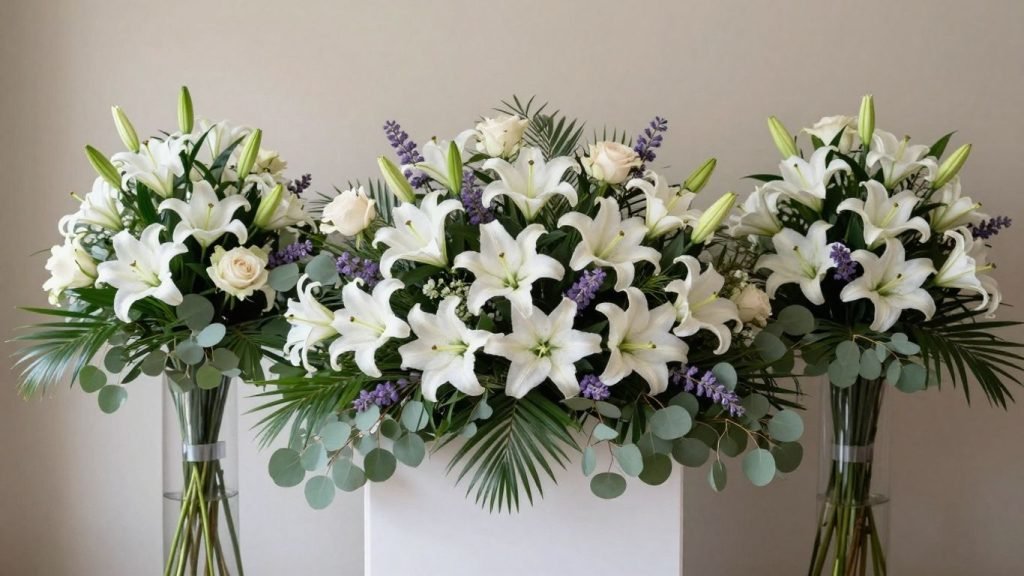
The setting often determines the most suitable design. A casket spray serves a different purpose from a standing wreath, and a vase arrangement may be better for a home than a large display. Think about scale, placement, and whether the flowers are intended for the service or the family.
Casket sprays and coffin flowers
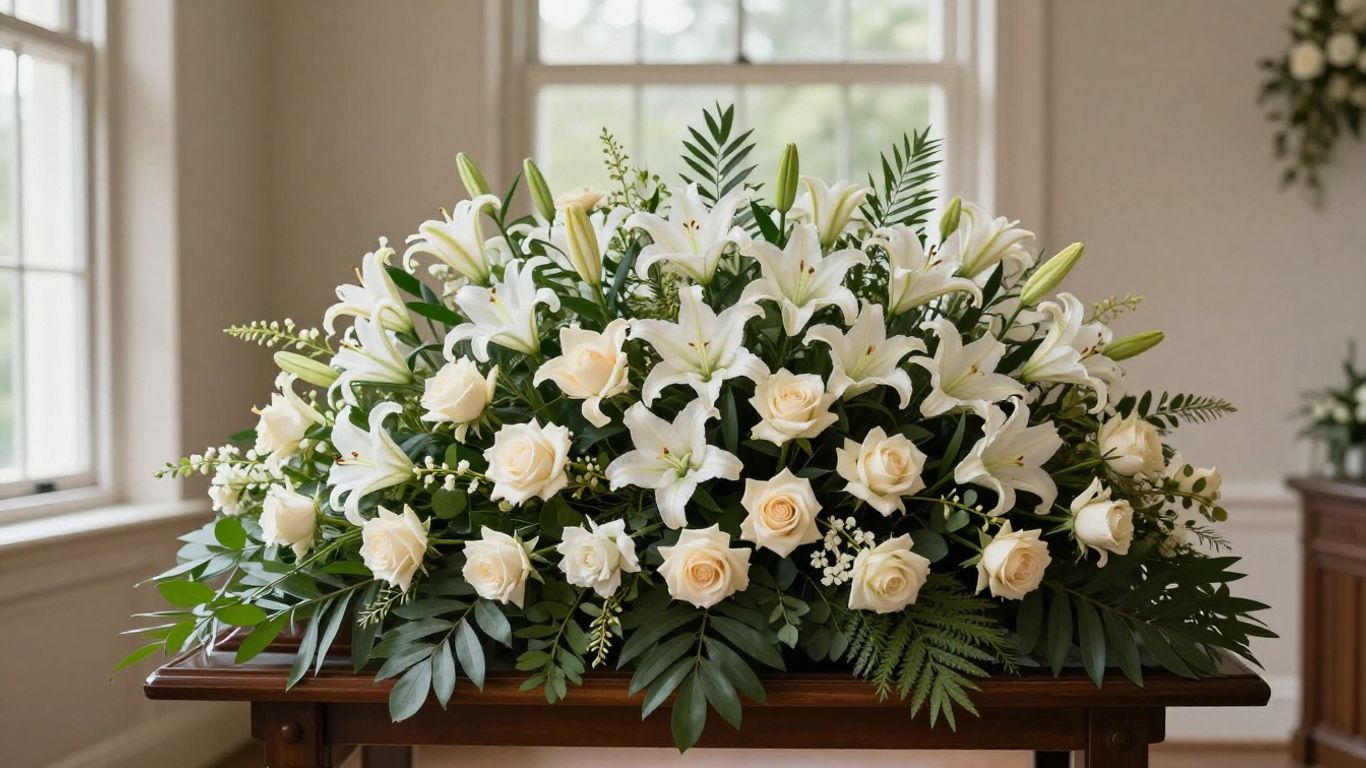
A casket spray is arranged to rest across the top of the coffin and is typically selected by immediate family members. It may be a full-length design or a smaller half-length arrangement, depending on the coffin and the family’s preference.
Before ordering, confirm the funeral home’s requirements and the timing for delivery. The staff may need to receive the flowers early enough to position them before the service begins.
Standing sprays and wreaths
Standing sprays are displayed on an easel and can be placed near the coffin, entrance, or service area. Wreaths offer a circular form that is often associated with remembrance and continuity, though their meaning can be interpreted differently by each family.
These larger designs work well when several people are contributing together. Include the group or organization’s name on the card so the family understands who sent the tribute.
Posies, bouquets, and vase arrangements
Posies and bouquets are versatile choices for a home, chapel, or smaller gathering. A vase arrangement can be especially practical because it is ready to display and may be easier for the family to move after the service.
Choose a size that suits the relationship and location. A compact bouquet can be just as considerate as a larger design when it has been selected with care.
Funeral flower baskets and tribute designs
Baskets provide a stable presentation and may be appropriate for a private home or reception area. Tribute designs can also be shaped around a meaningful theme, such as a favorite pastime, occupation, or shared interest, provided the style remains appropriate for the family and service.
Ask the florist how the design will be transported and displayed. A clear plan helps prevent an arrangement from arriving too large for the intended table or room.
Choose flowers, colors, and symbolism
Flower choice can influence the mood of a tribute, but symbolism is never fixed. A flower may have a traditional association while also carrying a personal meaning for the family. Aim for a combination that feels respectful, visually balanced, and connected to the person being remembered.
Traditional flowers for funeral services
Roses, lilies, chrysanthemums, carnations, orchids, and seasonal flowers are all commonly used in funeral work. White lilies can create a classic, serene appearance, while roses may express love, admiration, or enduring affection depending on their color.
Availability changes with season and location, so it is wise to ask what is freshest and most suitable for the date. A well-designed seasonal arrangement can feel more natural than a rigid request for one unavailable bloom.
The meaning of white, pastel, and vibrant colors
White and cream often suit formal services because they create a calm, understated appearance. Pastels can feel gentle and welcoming, while stronger colors may be appropriate when they reflect the person’s personality or favorite palette.
Color should also work with the venue. A bright arrangement may be fitting for a celebration-of-life service, while soft tones may better suit a quiet chapel or graveside ceremony.
Personalizing arrangements with favorite flowers
A favorite flower can turn a conventional tribute into something recognizably personal. You might include one distinctive bloom among more traditional flowers, or choose a color combination associated with the person’s home, clothing, garden, or interests.
Keep the overall design coherent. Personalization works best when it adds a meaningful detail without making the arrangement difficult to transport or display.
Balancing elegance with the tone of the service
The arrangement should support the atmosphere rather than draw attention away from the family and ceremony. Consider the formality of the service, the size of the venue, and whether the family has described the event as traditional, intimate, or celebratory.
A florist can help balance shape, color, and scale. Share the context honestly, including whether the flowers are for a viewing, memorial service, burial, or home delivery.
Plan delivery in Altona Meadows
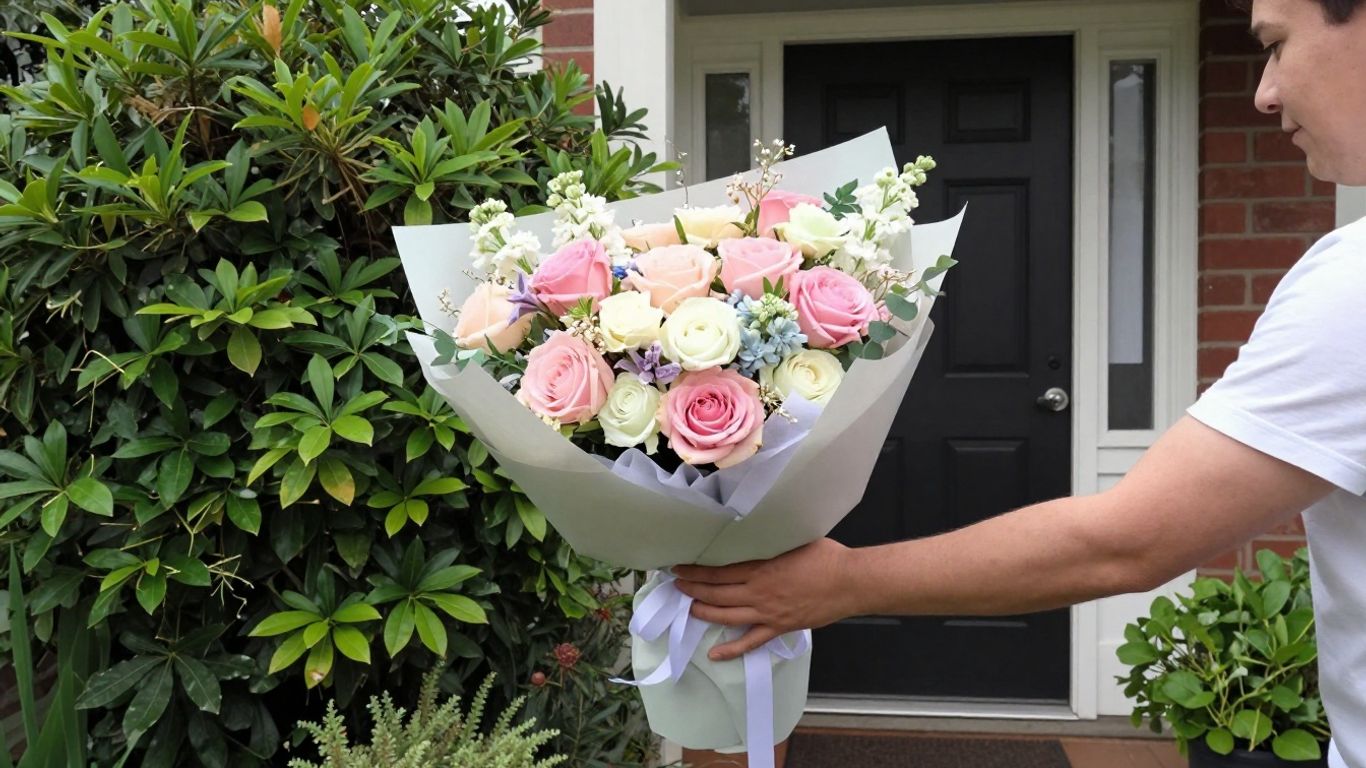
Delivery details deserve as much care as flower selection. A beautiful arrangement can cause stress if it reaches the wrong venue or arrives after the service has started. Confirm the location, recipient, date, and preferred delivery window before payment.
Coordinating with the funeral home or venue
Funeral homes and venues may have rules about delivery access, refrigeration, setup, and the types of displays they can accommodate. Ask whether flowers should be addressed to the venue, the funeral director, or a named family member.
If the arrangement includes an easel, casket placement, or a large tribute, mention this when ordering. The venue may need advance notice to make space and arrange the display.
Choosing the right delivery time
For a service, delivery should normally be scheduled well before guests arrive, with enough time for staff to receive and position the flowers. For a home delivery, a daytime window may be less disruptive than an early morning or late evening arrival.
If the service schedule is changing, contact the florist promptly. Funeral arrangements often involve several moving parts, and early communication gives everyone more room to respond.
Confirming addresses and service details
Double-check the street address, suburb, service date, start time, and the deceased person’s full name. Similar names or multiple venues can lead to confusion, especially when several services are being held nearby.
A useful order confirmation should state the arrangement, card message, recipient, destination, and delivery window. Read it slowly before approving the order.
Handling deliveries for cemeteries and private homes
Cemetery deliveries can require a precise meeting point, grave location, or contact person. Private homes may need instructions about gates, apartments, parking, or a discreet place to leave the flowers if no one answers.
Provide a phone number for someone who can respond on the day. If the location is difficult to access, ask whether delivery to the funeral home or a family contact would be safer.
Set a practical funeral flower budget
A thoughtful tribute does not need to be the largest arrangement in the room. Price usually reflects flower choice, size, design complexity, container, delivery distance, and timing. Set a comfortable range first, then ask what style will offer the best result within it.
Comparing arrangement sizes and styles
Compare arrangements by both dimensions and purpose. A small vase may be ideal for a home, while a standing spray needs enough height and structure to be visible during a service. Photos can help, but ask whether the pictured size matches the option you are considering.
| Arrangement style | Typical setting | What to compare |
|---|---|---|
| Casket spray | Coffin or viewing | Length, placement, and family preference |
| Standing spray | Chapel or service venue | Height, visibility, and easel availability |
| Vase arrangement | Private home or reception | Container, portability, and table space |
| Basket or tribute design | Home or memorial area | Stability, scale, and delivery access |
The right comparison is not simply “small versus large.” It is whether the arrangement suits the setting and communicates your relationship appropriately.
Accounting for delivery and service fees
Ask whether delivery, containers, setup, tax, and any service charges are included in the quoted price. A lower advertised arrangement price may change once a specific venue or delivery window is added.
If the flowers are going to a funeral home or cemetery, confirm any additional handling or setup requirements before finalizing the order. A clear total helps prevent awkward follow-up questions later.
Finding meaningful options at different price points
A modest arrangement can still feel distinctive when it uses a thoughtful color palette, a favorite flower, or a carefully written card. Group orders are another option when friends, relatives, or colleagues want to contribute toward one larger tribute.
You can also ask about seasonal flowers, smaller designs, or a hand-tied bouquet. These choices may preserve warmth and quality without stretching the budget.
Avoiding common ordering mistakes
Most problems come from unclear information rather than poor intentions. Before submitting an order, check these practical details:
- The recipient’s name is spelled correctly.
- The venue or home address includes all access information.
- The delivery date and time match the service schedule.
- The card message is complete and free of typing errors.
Taking a few minutes to check these points protects the family from avoidable confusion. It also gives the florist the best chance of delivering the tribute as intended.
Order funeral flowers with confidence
Ordering during a period of grief can feel difficult, especially when you are making decisions quickly. A calm conversation with a florist can simplify the choices and help you avoid unsuitable sizes, colors, or delivery instructions. Bring the service details and a clear budget to that conversation.
Working with a local florist
A local florist may be familiar with nearby funeral homes, cemeteries, venues, and delivery routes. Explain the relationship you had with the person, the tone of the service, and where the flowers should be displayed.
You do not need to know the name of every flower before calling. A description of the desired mood, size, colors, and budget gives the florist a practical starting point.
Reviewing photos, flower availability, and substitutions
Ask to see a photo or example of the arrangement style when possible. Seasonal availability can affect the exact blooms, so discuss acceptable substitutions before the order is confirmed.
Good substitutions should preserve the general color, shape, and feeling of the original design. If a particular flower has personal importance, say so clearly rather than leaving the decision open.
Adding a personalized card or tribute message
The card message can be brief and still carry real warmth. Mention a shared memory, offer support, or simply acknowledge the family’s loss. Avoid language that assumes how they should feel or how quickly they should heal.
If several people are sending the arrangement, list the names in a way that will be easy for the family to recognize. A handwritten-style message can make a formal tribute feel more human.
Checking the final order before the funeral service
Read the final confirmation one more time, preferably against the funeral notice or information provided by the family. Check the arrangement type, flower preferences, card wording, delivery details, and contact number.
Once everything is correct, save the confirmation and remain reachable on the delivery day. That final bit of preparation can make the process feel much more manageable.
Conclusion
Choosing funeral flowers is less about finding a perfect formula than making a considerate decision that fits the person, the family, and the setting. With a suitable arrangement, clear delivery details, and a sincere message, even a simple floral tribute can offer comfort and respect.
Frequently Asked Questions
What flowers are most appropriate for a funeral?
Lilies, roses, chrysanthemums, carnations, orchids, and seasonal flowers are common choices. The most appropriate option depends on the service style, family preferences, cultural customs, and the relationship you shared with the person.
What color flowers should I send to a grieving family?
White and cream are traditional and understated, while pastels create a softer impression. Vibrant colors can also be suitable when they reflect the person’s personality or the tone of a celebration-of-life service.
Should funeral flowers be sent to the service or the family’s home?
Send flowers to the service when you want to contribute to the ceremony or display. Send them to the home when you want to offer a private gesture of support after the service or when the family has requested home deliveries.
How far in advance should funeral flowers be ordered?
Order as soon as you know the service details, particularly for large designs, specific flowers, or cemetery deliveries. Earlier ordering gives the florist more time to confirm availability and coordinate with the venue.
What should I write on a funeral flower card?
Keep the message sincere and concise. You might express sympathy, mention a fond memory, or offer support to the family without making assumptions about their grieving process.
Are large funeral arrangements always better?
No. The best size depends on the venue, display area, relationship, and budget. A smaller arrangement can be deeply meaningful when its flowers, colors, and message have been chosen thoughtfully.
What details should I confirm before ordering?
Confirm the deceased person’s name, service date and time, complete delivery address, venue contact, arrangement type, card message, budget, and any substitution preferences. These details help prevent delays and misunderstandings.