
Key Takeaways
Choosing sympathy flowers is a quiet way to offer care when words feel difficult. The most suitable tribute respects the family, the setting, the relationship, and the timing.
- Consider whether the flowers are intended for the family home, a service, or a memorial.
- Choose an arrangement style that suits the setting and is easy for the recipient to manage.
- Let the family’s cultural, religious, and personal preferences guide your choices.
- Confirm delivery details early, especially when flowers need to arrive before a service.
- Add a sincere card message so the arrangement feels personal rather than formal.
Understand the role of sympathy flowers
Sympathy flowers are not about finding a perfect display. They are a gentle acknowledgement of loss and a visible reminder that someone is being remembered. For families in mourning, a considerate gesture can bring comfort without demanding conversation. This condolence flower guide can also help when you are unsure how the type of arrangement, colour, and delivery setting fit together.
Expressing condolences through flowers
Flowers can communicate support when ordinary language feels inadequate. A modest bouquet sent to a home may say that you are thinking of the family, while a larger tribute at a service can acknowledge the significance of the person who died. The gesture matters more than making an impressive choice. A thoughtful gesture matters most when it feels sincere and appropriate to the people receiving it.
Choosing between funeral and sympathy arrangements
The terms overlap, but the intended setting is often different. Funeral flowers are commonly designed for a viewing, funeral, or memorial service, while sympathy flowers may be sent directly to relatives or friends at home. Consider where the arrangement will be placed, how large it should be, and whether the family has requested flowers for the service or donations instead.
Considering the family’s wishes and traditions
Family customs, faith, and cultural traditions may influence what feels respectful. Some families welcome flowers, while others prefer a charitable donation or a simple note. If you know a close relative or the funeral director, asking discreetly is usually kinder than guessing. When no guidance is available, choose something restrained and include a message focused on support rather than ceremony.
When flowers may not be the most appropriate gesture
Flowers may not suit every situation. A family may have requested donations, limited the number of tributes, or mentioned a preference for practical support. In those cases, follow the request and send a card, make a meal, or offer help with an errand instead. Respecting the family’s wishes is itself a meaningful expression of sympathy.
Choose the right type of arrangement
The shape and scale of an arrangement should match where it will be seen. A tribute for a service can be more formal and substantial, whereas flowers for a home should be manageable and easy to place. Think about the recipient’s space as well as your relationship with the person who died.
Wreaths and circular funeral tributes
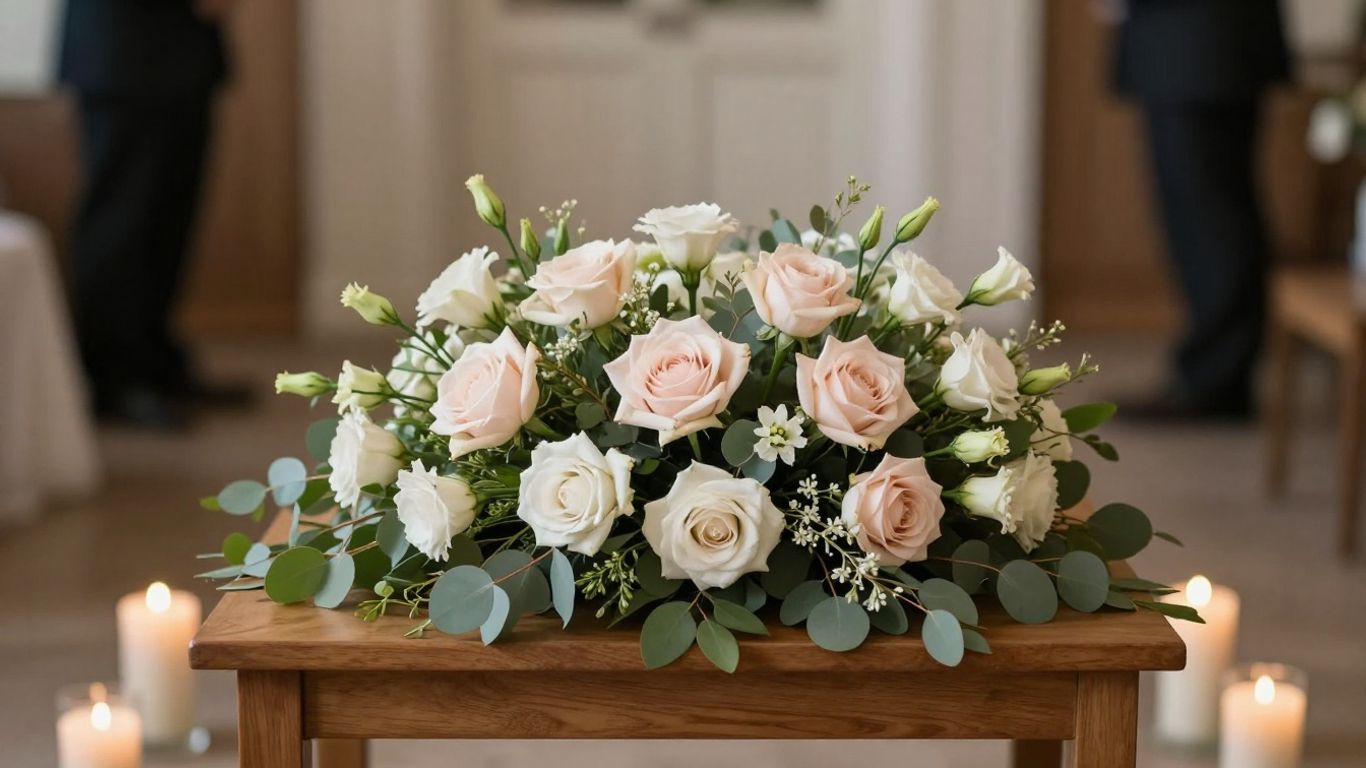
Wreaths have a traditional, formal appearance and are often selected for a funeral or memorial service. Their circular shape can sit neatly on an easel or near a casket, depending on the arrangements made by the family. They are usually best ordered with the venue and service time clearly confirmed, since they are intended for a particular setting.
Standing sprays for memorial services
Standing sprays create a visible tribute that can be placed near the front of a service or gathering. They work well when several relatives, friends, or colleagues are contributing to a formal display. Choose a proportionate design rather than the largest available option, and make sure the venue can accommodate an easel arrangement.
Bouquets and vase arrangements for the home
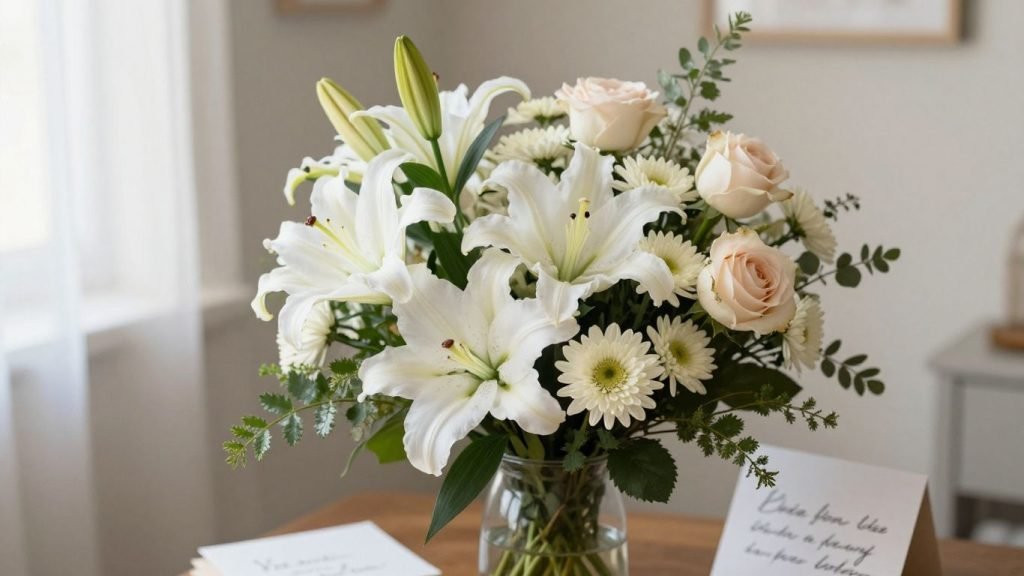
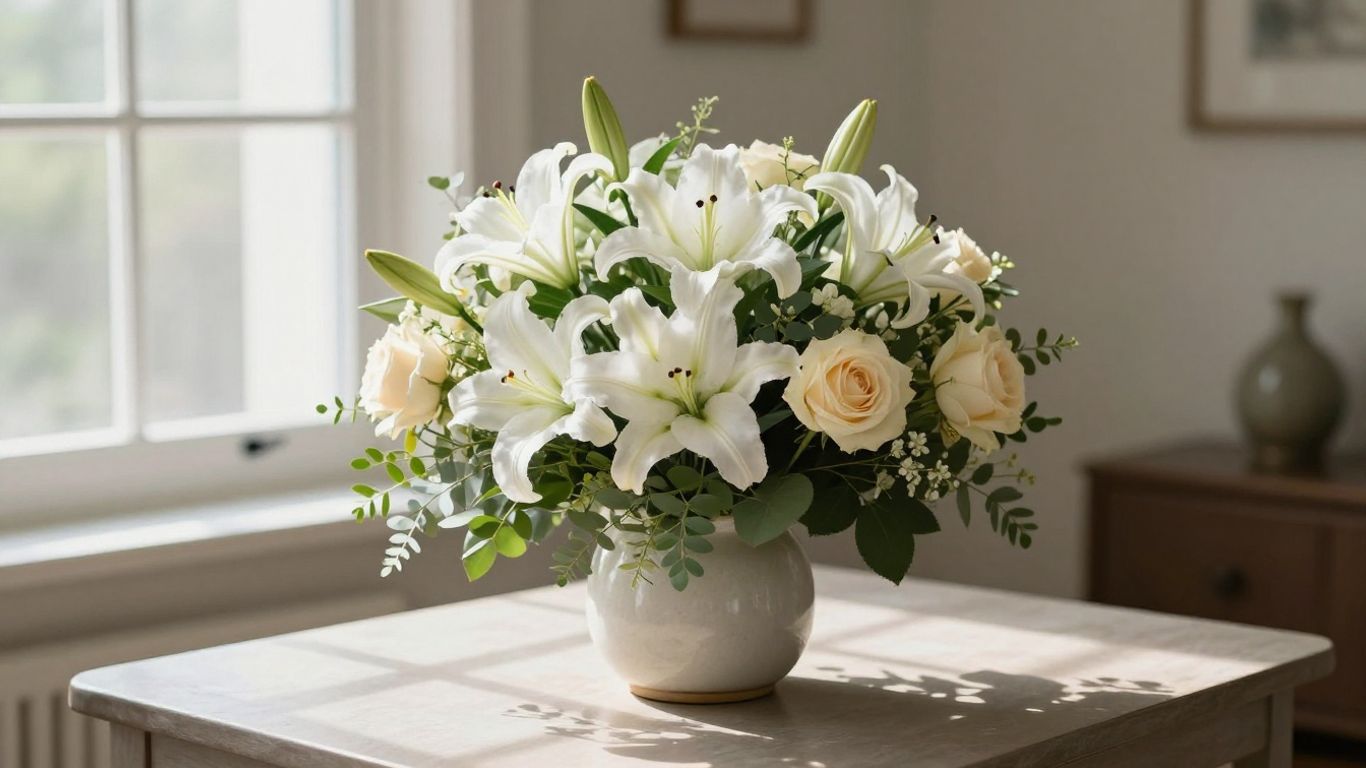
A bouquet or vase arrangement is often a considerate choice for a family home. It can be placed in a living room, entrance, or kitchen, where relatives may see it during the days after the loss. A manageable size, a water source, and a calm colour palette make the gesture easier to receive and care for.
Sympathy plants as a lasting alternative
A sympathy plant can remain after cut flowers have faded, making it suitable for someone who enjoys gardening or caring for indoor plants. Choose a low-maintenance variety if you are unsure of the recipient’s routine. A plant is still a personal gift, so it is worth checking whether the household has room or an interest in looking after one.
Select suitable flowers and colours
There is no single correct flower for mourning. White blooms remain a familiar choice, but soft colours and seasonal flowers can also feel respectful when they reflect the family or the person being remembered. Aim for a design that feels calm and intentional rather than overly elaborate.
Traditional flowers for expressing sympathy
Lilies, roses, chrysanthemums, carnations, and orchids are often used in sympathy arrangements because they can create a formal, composed display. Their suitability depends on the family and the setting, so avoid treating traditional meanings as fixed rules. A florist can help combine flowers in a way that looks balanced and remains appropriate for the occasion.
The meaning of white, pastel, and soft-toned blooms
White flowers are associated with peace, simplicity, and remembrance, while pale pinks, creams, and soft blues can bring warmth without becoming too bright. Pastel arrangements may be especially suitable for a home delivery or a close friend. Colour should support the message, not overpower it, and restrained greens can give the arrangement a natural finish.
When brighter colours may be appropriate
Brighter colours are not automatically inappropriate. They may suit someone who was known for a lively personality, a love of gardening, or a strong preference for colourful flowers. If the family is treating the service as a celebration of life, a more vivid arrangement can be fitting. The best guide is what you know about the person and what the family has expressed.
Avoiding overly personal or celebratory designs
A highly themed design can feel out of place if you do not know the family well. Avoid novelty containers, strong fragrances, or arrangements that look like birthday or anniversary gifts unless a close relative has asked for something specific. A simple card and carefully chosen flowers usually convey sympathy more clearly than decorative extras.
Match the arrangement to the relationship
The closer your relationship, the more personal the tribute may be, but closeness does not require extravagance. A neighbour, colleague, or distant acquaintance can send something modest and sincere. The aim is to acknowledge the loss appropriately, without making the family feel they must respond or compare contributions.
Flowers for an immediate family member
When the deceased was an immediate family member, you may want an arrangement that reflects shared memories or a significant role in the person’s life. Discuss the choice with other relatives if the flowers are intended for the service. For a home, select something comforting and manageable, particularly when the household is already receiving several arrangements.
Arrangements for a friend, neighbour, or colleague
For a friend or neighbour, a vase arrangement or tasteful bouquet is usually a warm choice. It can be sent to the family home with a short note explaining that you are thinking of them. Colleagues may wish to contribute to one larger arrangement, which can feel more personal than several unrelated gifts.
Appropriate choices for professional condolences
A professional condolence should be respectful without becoming too intimate. A classic arrangement in white, cream, or soft tones is generally easy to receive, and a card can be signed by the team or organisation. Before ordering, check whether a family contact has provided instructions about flowers, donations, or the service.
Selecting a tribute for someone with specific tastes
Personal preferences can guide a tribute beautifully when you know them well. Favourite flowers, native textures, garden colours, or a preferred style may make the arrangement feel connected to the person rather than generic. Keep the overall design suitable for mourning, then let one or two meaningful details carry the personal message.
Arrange sympathy flower delivery in Altona
Delivery details deserve as much care as the flowers themselves. A beautiful arrangement that arrives after a service, at the wrong venue, or without a reachable recipient can create unnecessary stress. Before placing an order, write down the delivery address, contact name, service time, and any venue instructions. For practical planning, see this information on same-day flower delivery and confirm the current ordering cut-off directly.
Choosing delivery timing for a service or visitation
For a funeral or visitation, arrange delivery early enough for the venue staff to receive and place the flowers. A home delivery may be more flexible, but it is still considerate to choose a time when someone is likely to be present. If the family is moving between locations, ask whether the home or service venue is the more useful destination.
Confirming the funeral home, church, or cemetery details
Use the exact name and address supplied by the family or funeral notice. Some services take place at one venue while the gathering or burial occurs elsewhere, so do not rely on a familiar suburb alone. Funeral flower advice can help you think through the differences between a service tribute, a memorial arrangement, and flowers sent to relatives.
Providing accurate recipient and delivery information
Include the deceased person’s full name, the recipient or family contact, the venue, and a phone number where possible. Add apartment, unit, reception, or cemetery instructions if they apply. A clear card message should travel with the arrangement, but the delivery information should remain specific and practical.
Understanding same-day delivery limitations
Same-day delivery may depend on the order time, stock, distance, traffic, and the type of arrangement requested. Large funeral tributes may need more preparation than a standard bouquet. Ask about availability before assuming a particular design can be made immediately, and allow extra time when the flowers must arrive before a scheduled service.
Personalise the floral tribute thoughtfully
Personalisation does not have to mean an elaborate arrangement. Often it is a carefully written card, a familiar flower, or a small detail that recalls the person naturally. Keep the recipient’s feelings at the centre of the choice, especially when the loss is recent and emotions are raw.
Writing a sincere sympathy card message
A good message is brief, warm, and specific when appropriate. You might mention a cherished quality, offer your condolences, or say that you are available to help. Avoid trying to explain the loss or use phrases that promise everything will soon be fine. Simple words such as “I am thinking of you and your family” can be enough when they are genuinely meant.
Adding meaningful flowers or keepsakes
Meaningful details can include a favourite bloom, a familiar colour, or a small natural element connected with the person’s garden. Keepsakes should be added only when you know they will be welcome and safe to handle. If the arrangement is going to a service, check whether the venue has rules about attached objects or containers.
Including the deceased person’s favourite blooms
Favourite flowers can make a tribute feel recognisably theirs. Bright sunflowers, scented roses, native stems, or simple garden flowers may all be suitable if they reflect the person’s tastes. A balanced arrangement can include the favourite bloom without turning the tribute into a celebratory display. More ideas for meaningful floral tributes may help if you want to connect the flowers with personality.
Coordinating with other family members or colleagues
Coordination prevents the family from receiving several oversized arrangements or conflicting messages. Relatives can decide whether one shared tribute is more suitable, while colleagues may collect contributions for a single bouquet or service display. Share the delivery details, card wording, and budget before ordering so the gesture feels unified rather than hurried.
If you are ordering close to a service, a final check of delivery details can help clarify available timing and arrangement options.
Conclusion
The best sympathy flowers Altona families receive are chosen with attention to the people, place, and moment. Whether you send a quiet bouquet home, a formal tribute to a service, or a personal arrangement featuring a favourite bloom, care and respect matter more than size or price.
Frequently Asked Questions
What flowers are most appropriate for sympathy?
White lilies, roses, chrysanthemums, carnations, orchids, and soft seasonal blooms are commonly chosen, but the family’s preferences and cultural traditions should guide the final decision.
Should sympathy flowers be sent to the home or funeral service?
Send them to the home when you want to support the family privately, or to the service when the flowers are intended as a shared tribute. Confirm the preferred location before ordering.
Are bright-coloured flowers inappropriate for a funeral?
Not necessarily. Bright colours can be suitable when they reflect the deceased person’s personality or the family’s wish to celebrate their life. Keep the overall design respectful and balanced.
What should a sympathy card say?
Use a short, sincere message offering condolences and support. Mention a positive memory if you knew the deceased well, but avoid explanations about the loss or overly familiar statements.
Can I send a sympathy plant instead of cut flowers?
Yes. A low-maintenance plant can be a lasting alternative, particularly for someone who enjoys gardening or caring for indoor plants. Check whether the recipient has space and would welcome the responsibility.
How far in advance should sympathy flowers be ordered?
Order as early as possible when flowers are needed for a service, since the venue, preparation time, delivery route, and arrangement size can affect availability. Home deliveries may offer more flexibility.
What if the family has asked for donations instead of flowers?
Follow the family’s request. A donation, handwritten card, meal, or practical offer of help may be more meaningful than sending flowers when donations have been specifically requested.